How Do You Make a Juilliard Hopeful Bounce?
How do you take a dancer trained to rise, lengthen, and control every line, then ask her to drop into a groove without making the shift look like a costume change?
That is the real choreographic problem at the center of Save the Last Dance. Not whether ballet and hip-hop can share a soundtrack. Not whether a teen romance can survive a rehearsal montage. The harder question is physical: can one body carry two movement logics that seem to argue with each other?
The film arrived in the January 2001 teen-cinema window, when mainstream dance films still tended to separate concert dance, club dance, and music-video movement into different screen languages. Ballet came with lifted torsos, turnout, elongated arms, and upward energy. The club vocabulary asked for bent knees, dropped weight, shoulder accents, rib isolations, and timing that lived inside the beat rather than above it.
Fatima Robinson’s impact begins there. She does not simply paste hip-hop steps onto a ballet plot. She builds a bridge out of posture, rhythm, weight, and social confidence.
Summary: Describing the film as simply “ballet plus hip-hop” misses the actual choreographic problem, which is the transfer of weight, posture, timing, and belonging from one cultural space to another.
Architecting a Cultural Collision
From lifted line to grounded rhythm
The film keeps placing Sara’s body in rooms where etiquette matters: audition room, school hallway, club floor, practice room. Each location teaches her what kind of body is welcome there.
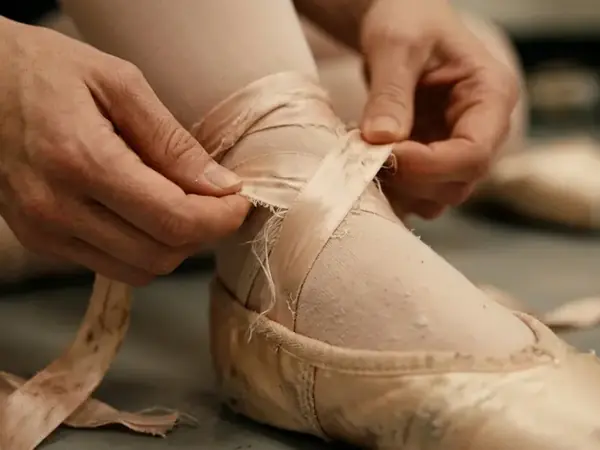
In the ballet-coded material, Sara stays mostly vertical. The sternum lifts, the chest opens, the arms remain controlled, and the feet point toward an idealized line. Even when she travels, she travels through a clean center. The technique is not just decorative; it tells us that she has learned discipline through height, precision, and restraint.
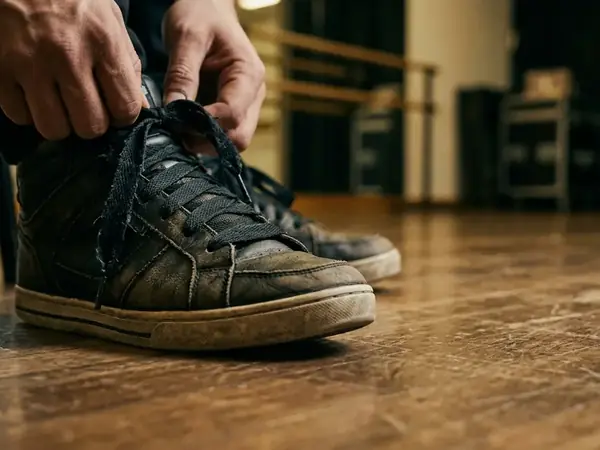
The Chicago club vocabulary changes the terms. Knees flex. The pelvis and ribs answer the beat. Shoulders mark accents. Steps organize themselves around groove cycles that can repeat in 8-count or 16-count phrases. Instead of proving control by escaping gravity, the dancer proves fluency by negotiating with it.
That difference gives the romance and the culture shock a physical texture. Sara is not only learning “new moves.” She is learning when to release, when to wait, when to echo someone else’s rhythm, and when to let the room pull her into its timing.
Peer feedback suggests that this is where Robinson’s work still reads clearly for contemporary viewers: the choreography makes social adjustment visible before the dialogue needs to explain it.
Translating the Club to the Screen: Robinson’s Process
Training for camera, not conservatory purity
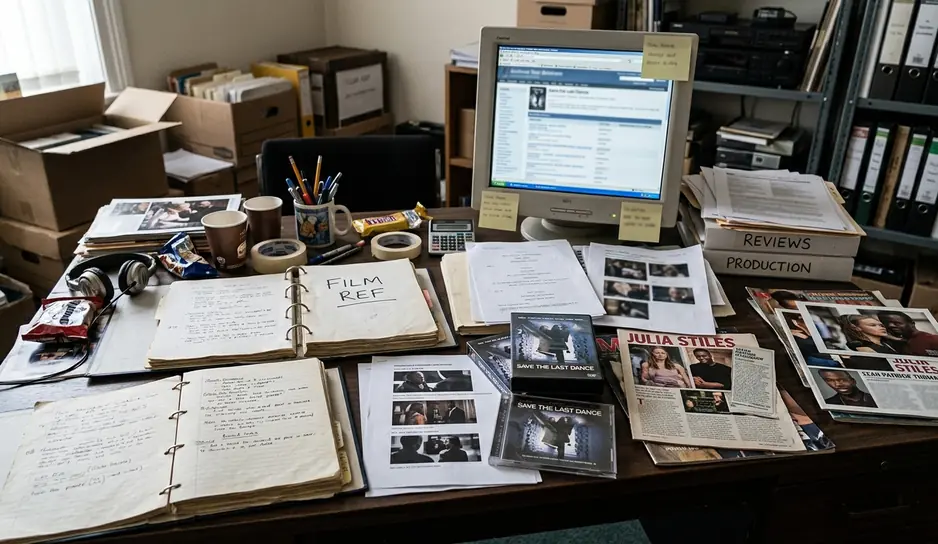
Robinson’s task was not to make every performer look like a professional concert dancer. The performers had to sell character, camera position, and social authenticity at the same time.
A teachable screen phrase in this setting works best when it breaks into short, repeatable units: a 4-count weight shift, an 8-count groove phrase, then a 16-count partner or group pattern that can reset quickly for camera coverage. That kind of structure lets an actor keep the emotional scene alive while still landing the movement where the lens can see it.
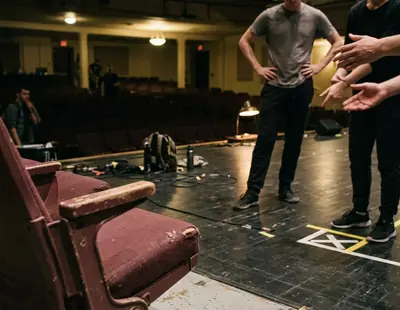
The authenticity target matters. The club dancing cannot look like a competition team has wandered into a teenage hangout. The shoulders need to stay loose. Accents can arrive a little late. Eye contact should feel casual rather than staged. Weight transfers should look social, not polished to a shine.
That looseness is harder than it sounds.
Why imperfection reads as truth
In a club scene, cleanliness is not always credibility. If every arm hits the same angle and every head turns on the same count, the room starts to feel rehearsed in the wrong way. Robinson’s method gives the dancers a shared rhythmic base while leaving enough air around the phrase for flirtation, hesitation, and personality.
For readers who want the broader movement lineage behind this vocabulary, the Kennedy Center’s overview of the historical foundations of hip-hop dance is a useful starting point. In the film, though, the lesson is specific: the choreography has to look like teenagers finding one another through rhythm.
Quick Tip: Watch the club scenes once without focusing on the lead couple. The surrounding bodies tell you whether the choreography has created a believable social world.
Deconstructing the Iconic Stepping Sequence
Bodies as percussion
The stepping sequence works because it makes rhythm both visible and audible. Foot stamps, hand claps, torso hits, and syncopated pauses turn the dancers’ bodies into percussion instruments.
This is not background movement. It is a test of listening.
Sara and Derek have to remain close enough for flirtation and correction, but separated enough for the audience to read the pattern. Their mirrored timing matters. So do the directional changes. So do the call-and-response accents that let one body challenge the other without turning the exchange into a formal duel.
That is why the scene lands as a narrative turning point. Sara’s progress is not measured by whether she suddenly becomes flawless. It is measured by whether she can stay in the pocket while another dancer shares it with her. The chemistry comes from timing, not just eye contact.
The spatial intelligence of the scene
Robinson uses space like a conversation. When the dancers step forward, the energy tightens. When they separate, the audience can read the phrase. When they return to proximity, the movement carries new trust.
The sequence also protects the social feel of the club. The dancers are not framed as isolated virtuosos. They are part of a room that understands the beat, and Sara’s entrance into that understanding is the point.
- Syncopation gives the scene its teasing quality, especially when accents arrive just off the expected pulse.
- Body percussion makes the rhythm legible without needing a verbal explanation.
- Spatial spacing keeps the pair readable as partners rather than as a single blended silhouette.
- Social looseness keeps the routine from becoming too clean for its setting.
Scope and Limitations: Choreographing for the Edit
What the camera could carry
It is tempting to judge every dance-film moment as though it were a continuous stage performance. That is not how early-2000s teen dance cinema usually worked.
Advanced ballet material presents a special problem on camera. High extensions, sustained turns, and clean landings expose technical flaws quickly because pointed feet, turnout, and center-line balance leave little room to hide. Club groove material is more forgiving in some ways, because social timing can absorb small variations. Ballet asks the lens to believe in exactitude.
So the choreography had to serve the edit. Quick-cut dance coverage favors modular phrases: one or two counts of a turn, a landing, a torso isolation, a facial reaction, then a reset into the next phrase. This structure can feel fragmented, but it also lets the film combine actor performance with more technically demanding movement.
Note: This reading is strongest for the narrative dance numbers; it does not claim Robinson staged every ballet-only insert or double-heavy technical passage.
Constraint as craft
The limitation does not erase the choreography. It clarifies the assignment.
Robinson had to create movement that could survive interruption. A phrase needed to be recognizable even if the camera caught only a shoulder hit, a drop of weight, or the recovery from a turn. That is a different craft from building a long concert passage, where the audience sees the whole arc unfold in real time.
Treating the final result as pure realism misses the conventions of the period. Editing, doubles, and hybrid staging were part of how dance became legible on screen. The trick was making those seams feel emotionally continuous.
The Climax: A Synthesis of Two Worlds
The audition as choreographic argument
The final Juilliard audition resolves the film’s central physical argument. Sara does not abandon ballet, and she does not wear hip-hop like borrowed decoration. The piece asks her to hold both histories in one body.
The structure blends ballet markers with hip-hop-coded interruptions. Turns and leaps still matter. Extended lines and lifted arms still speak. Then the flow breaks: torso hits, sharper arm accents, grounded weight drops, and rhythm changes disturb the expected classical pathway.
Those interruptions are the point. They show that Sara’s movement has changed at the level of timing, not just vocabulary. Her body can now rise and drop. It can stretch into line and then answer the beat. It can carry aspiration without pretending that aspiration must look culturally neutral.
Why Robinson’s impact still matters
Robinson raised the standard for teen dance films by treating choreography as character development. The dancing does not pause the story. It tells the story in another grammar.
That legacy is easy to underestimate because the film’s surface pleasures are so immediate: the club, the romance, the audition pressure, the early-2000s texture. But underneath that nostalgia is a careful movement design. Posture becomes biography. Weight becomes belonging. Rhythm becomes trust.
Two decades later, the film still invites close viewing because Robinson understood the assignment at its most human level: teach the audience to see a young woman learning where her body can belong, then let the final dance prove it.