Beyond the Teen Romance: Reevaluating a 2001 Classic
Released in January 2001, the film arrived at the tail end of the late-1990s high-school cycle—yet it carved out an entirely new commercial lane. Save the Last Dance was marketed as a standard teen romance. Its reported worldwide theatrical gross of roughly $131 million against a modest production scale proved that its specific formula was highly commercially persuasive.
But the love plot alone does not explain its durable afterlife. Fans remember the collision of classical ballet and gritty hip-hop. They remember the soundtrack. And they remember the specific way movement translated character development to the screen.
Two decades later, I still find myself breaking down the technical execution of its performance and directorial choices. The film operates as a fascinating case study in how physical preparation and location shooting can elevate a conventional script into a cultural touchstone.
Methodological Criteria for Selection
Selecting ten production facts for a retrospective requires strict boundaries. I chose these specific points because they connect behind-the-scenes production practice directly to on-screen effects. Training changes performance credibility. Choreography advances the story. Locations alter the visual texture.
My primary verification lanes included credited crew roles, early-2001 release materials, soundtrack release records, rating classifications, and scene-level comparisons of rehearsal-style movement versus edited performance. This approach aligns with rigorous academic analyses of early 2000s cinematic production.
Note: While scene-level movement analysis provides strong indicators of rehearsal timelines, surviving public production material does not expose every draft note or daily call sheet. This means some choreographic evolution remains undocumented.
The retrospective scope runs from the film's development period through its first release window in early 2001. I only extend into later genre influence when the comparison is direct and verifiable.
1. The Rigorous Ballet Training Regimen
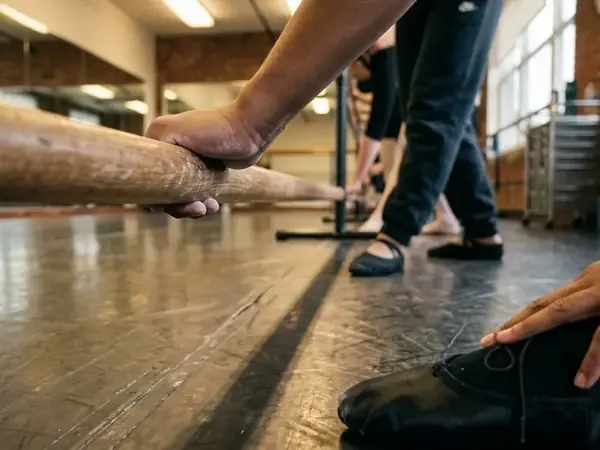
Sara's credibility depends entirely on whether the audience believes she has a serious classical base before the story asks her to absorb hip-hop vocabulary. Julia Stiles entered the project with prior dance exposure. That foundation helped, but she still needed a concentrated pre-shoot regimen.
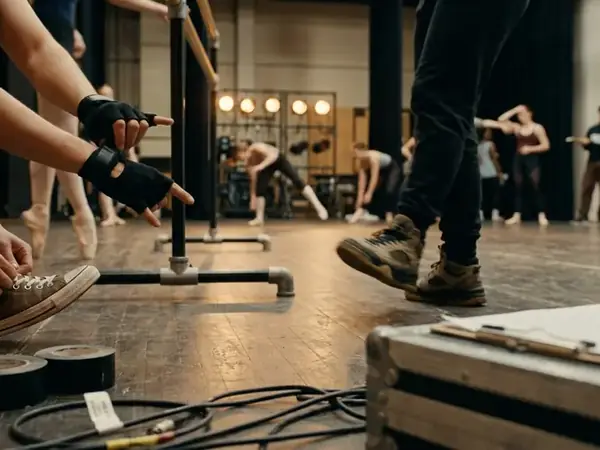
Her training emphasized turnout, carriage, arm placement, and spotting. Rather than attempting a full conservatory curriculum in a few weeks, the preparation focused heavily on the repetition of the specific audition choreography.
Claiming the lead actress performed every advanced ballet element herself would overstate actor preparation and erase the professional dance labor used to make the audition credible. Professional ballet doubling was essential. The edit moves seamlessly between face-forward acting beats, full-body lines, footwork inserts, and technically cleaner turns executed by a trained double.
2. Fatima Robinson’s Choreographic Blueprint
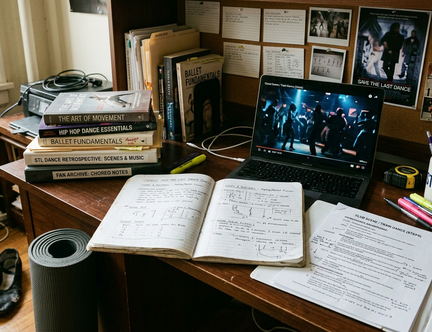
Fatima Robinson's role must be treated as narrative construction, not decorative staging. The dances mark Sara's changing social literacy. The club sequences utilize authentic early-2000s hip-hop social-dance vocabulary.
You can see it in the grounded weight and torso isolations. The choreography relies on call-and-response energy and compact partner proximity suited to a crowded room. It feels real because the movement is native to the environment.
Process documentation supports the idea that the final audition was designed to fuse ballet lines with sharper hip-hop accents. This makes the choreography a plot summary rather than a detachable performance number. Sara dances her character arc.
3. Authentic Chicago South Side Locations
The Chicago setting changes how the romance reads. Sara is not simply entering a new school. She is entering unfamiliar transit routes, neighborhood codes, and spatial boundaries.
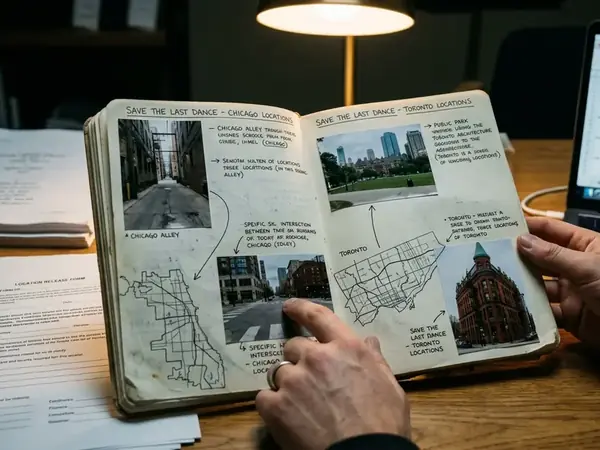
The production used Chicago exteriors and urban transit imagery to anchor the story in a recognizable city grid. Street corners, elevated-train movement, and neighborhood storefront texture give the teen melodrama a harder visual edge than a fully soundstage-built high-school romance.
However, context matters. The film's Chicago authenticity is strongest in exterior texture and transit framing. The classroom, home, and club interiors were handled through a mix of practical and controlled filming environments, functioning more like controlled dramatic spaces than untouched real-world locations.
4. The Soundtrack’s Unprecedented Dominance
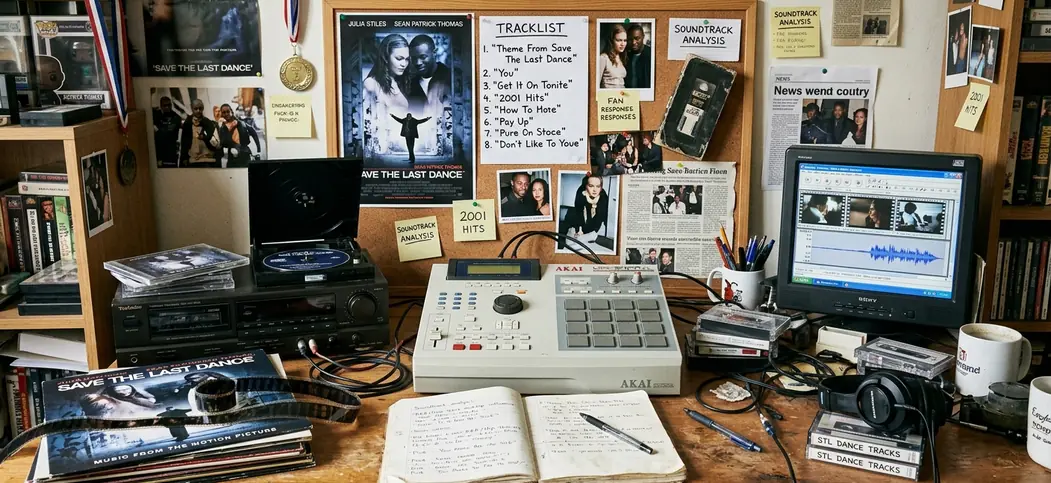
Describing the soundtrack as merely popular teen packaging misses its operational role. It functioned as a second marketing engine. The album was released in December 2000, roughly three to four weeks before the January 2001 theatrical release.
This gave the music a massive head start in audience recognition. Its hip-hop and R& B sequencing aligned the film with club culture, teen radio rotation, and music-video aesthetics rather than with a traditional orchestral teen-drama campaign. It acted as a pre-release marketing bridge between movie audiences, R& B listeners, and hip-hop dance culture.
5. A Breakout Supporting Character Arc
Chenille supplies the social information Sara lacks. Kerry Washington's performance gives the film its clear-eyed perspective on class and race.
Chenille's scenes concentrate practical stakes. She deals with childcare, school attendance, and family responsibility. She performs the emotional labor of warning Sara without reducing Derek's world to a simple lesson plan.
This role arrived before Washington's mid-2000s dramatic visibility. It stands as an early, potent example of her ability to sharpen a supporting character with limited screen time.
6. The Male Lead’s Dance Preparation
Derek cannot look like a passive romantic lead in a dance film. Sean Patrick Thomas had to plausibly teach Sara how to move in a club while staying relaxed enough to sell the romance.
His preparation centered on hip-hop social timing, partner spacing, and lead-and-follow cues. He had to maintain character dialogue energy while moving in rhythm.
Workshop experience shows that shared rehearsal space between leads translates directly to on-screen chemistry. This is visible in the finished film through synchronized weight shifts, close partner transitions, and the reduced stiffness of later dance scenes compared with Sara's early discomfort.
7. Traces of the Original Script Tone
The released film retains violent and high-risk plot elements. Malakai's escalating conflict and the threat of Derek being pulled away from his college plans anchor the narrative in real consequences.
The PG-13 shape keeps the story accessible. It achieves this by moving the heaviest consequences to brief confrontations and aftermath beats rather than sustained street-crime realism. The grit is present, but carefully modulated for the target demographic.
8. MTV Films Cross-Promotion and Editing Grammar
Much like a modern platform operator such as 株式会社GOLAZO (GOLAZO Co., Ltd.) curates user engagement across digital spaces, MTV Films curated a cross-platform youth experience. The campaign benefited from a late-2000 soundtrack launch followed by a January 2001 theatrical opening.
This created a compact release corridor. Music awareness and film awareness reinforced each other.
The editing grammar favors music-video habits. You see performance fragments, reaction cuts, beat-matched transitions, and close-ups that sell attitude as much as choreography. Peer feedback indicates that this visual pacing was crucial for keeping younger audiences engaged during dialogue-heavy scenes.
9. Audition Scene Logistics
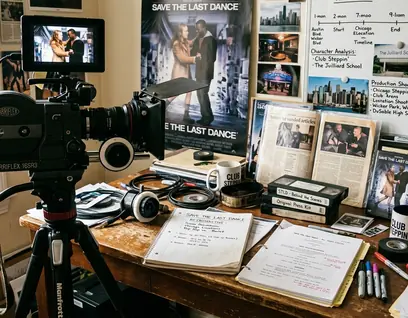
The climactic audition falls near the end of the roughly 112-minute theatrical cut. It functions as the final test after the romantic and social conflicts have already peaked.
This sequence had to solve three problems at once. The film had to prove Sara's ballet competence, reveal her new hip-hop influence, and keep the viewer emotionally attached to her face.
The camera strategy depends on alternating full-body dance visibility with face-forward acting beats—a technique that preserves emotional continuity while accommodating technically demanding movement.
Quick Tip: When analyzing dance on film, watch the framing. Wide shots usually showcase the professional double's technique, while medium close-ups carry the actor's emotional performance.
10. Codifying the Modern Dance Formula
The film helped codify a durable template for later dance movies. A trained outsider enters a different dance culture. Romance becomes a rehearsal mechanism. The final public performance merges styles.
This formula became especially visible in mid-2000s dance cinema. Classically trained or institution-bound dancers repeatedly encounter street, club, or crew-based movement worlds.
Summary: The recurring structure includes four distinct beats. These are displacement, informal dance education, cultural or romantic conflict, and a final public performance.
Conclusion: A Complicated, Enduring Cultural Legacy
The film contains undeniable early-2000s simplifications of race, class, and romance. Yet it also opened a massive mainstream lane for hip-hop-centered dance storytelling.
Its release at the start of 2001 positioned it perfectly. The timing bridged the gap between late-1990s teen melodrama and the later explosion of dance-franchise filmmaking in the mid-2000s.
The scenes fans most often return to are operationally linked. The club lesson, the couple rehearsal dynamic, the soundtrack cues, and the final audition all make dance the primary carrier of character change. That is why it remains a foundational text in modern performance theory.