The Direct-to-Video Dilemma: Following a Cult Classic
The inherent risk of producing a sequel to a definitive 2000s cultural touchstone multiplies when the original stars decline to return. Save the Last Dance opened theatrically in January 2001 and immediately anchored itself in the teen romance canon. It was a theatrical event that merged gritty Chicago street dance with classical ballet. Save the Last Dance 2 followed as a direct-to-video sequel in October 2006. This created a gap of more than five years between the original audience moment and the continuation.
The sequel does not bring back Julia Stiles as Sara Johnson or Sean Patrick Thomas as Derek Reynolds. Without the original couple, the production had to rebuild audience attachment from scratch. To achieve this, the narrative relocates Sara from the Chicago social world of the first film to the Juilliard-centered training spaces of New York.
The stakes shift entirely. Survival in a new high school is replaced by the pressure of auditions, studio discipline, and institutional approval.
Recasting Sara Johnson: Analyzing the Shift in Protagonist Dynamics
Recasting a beloved protagonist requires a delicate balance of continuity and reinvention. Izabella Miko plays Sara Johnson in the 2006 sequel, taking over a role that audiences heavily associated with Stiles. Miko is not simply asked to imitate her predecessor. She is tasked with carrying the same backstory while making Sara function in a highly competitive conservatory environment.
The romantic dynamic also undergoes a complete overhaul. The sequel introduces Columbus Short as Miles, its central hip-hop-linked romantic and creative counterpart. Miles replaces the Derek Reynolds relationship function rather than continuing Derek as a character.
This recast fundamentally alters the chemistry. Sara and Miles meet in a performance-training environment, and their connection is built on shared artistic ambition. Sara and Derek's original relationship, by contrast, was deeply tied to school, neighborhood movement, club culture, and interracial social tension. The sequel trades broad social friction for focused artistic collaboration.
Choreography and Musicality: The Evolution of Ballet and Hip-Hop Fusion
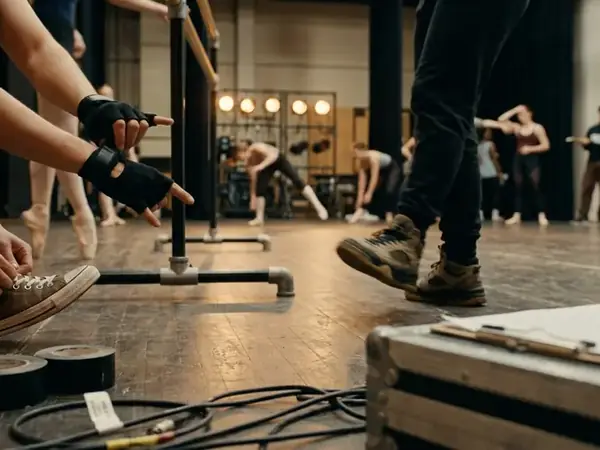
Once Sara is placed in an elite arts-school setting, the choreography has to look technically deliberate. The ballet side is signaled through strict classroom and rehearsal vocabulary. Viewers see upright carriage, elongated lines, turnout, and controlled extensions. The constant pressure of being watched by instructors or evaluators hangs over every movement.
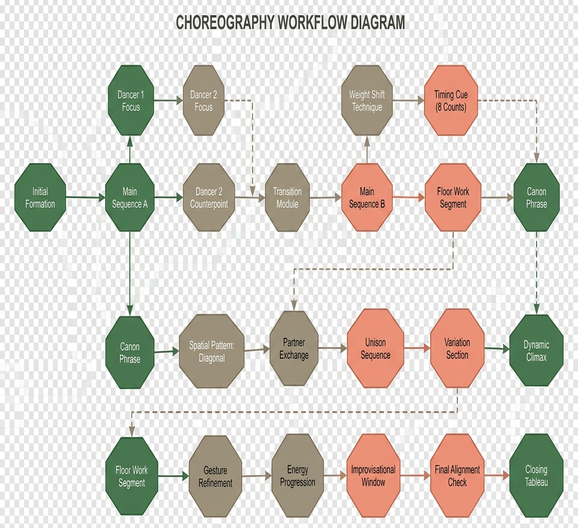
The hip-hop side leans heavily into mid-2000s screen-dance language. The choreography features sharper isolations, grounded weight shifts, and club-style partnering. Rhythm accents are specifically designed to contrast with Sara's classical training.
The choreography escalates because the sequel's key dance spaces are institutional rather than casual. Studios, auditions, and performance-preparation scenes replace much of the first film's school hallway, house party, and club-world texture. The soundtrack strategy echoes the original's R& B and hip-hop identity. However, the sequel uses music more as scene support for rehearsal, attraction, and self-expression than as a major pop-cultural event in its own right.
Scope and Limitations: Narrative Constraints of the 2006 Sequel
A direct-to-video continuation has fewer reasons to stage a wide social panorama. The sequel's conflict is concentrated around Juilliard expectations, personal ambition, and dance identity. By contrast, the 2001 film spread its drama across grief, interracial romance, school culture, neighborhood boundaries, and college aspiration.
The direct-to-video format encourages a tighter visual and narrative footprint. The story depends heavily on interior training spaces and features fewer broad community locations than the original. The film's authority is strongest when read as a conservatory-pressure dance melodrama, not as a full continuation of the original's racial and socio-economic commentary.
Note: This reading is most useful for viewers judging the film as a franchise sequel; viewers approaching it as a stand-alone dance-school romance may weigh the recasting and reduced social scope less heavily.
Failure case: the sequel disappoints when treated as a substitute for the 2001 film's Sara-and-Derek romance. Because Derek is absent, the racial, neighborhood, and high-school tensions are substantially reduced.
The Film's Enduring Place in 2000s Teen Dance Cinema
The sequel arrived in 2006, the same year the first Step Up film reached theaters. This timing places it directly beside the next major wave of hip-hop-and-romance dance cinema. Screen dance was moving toward slicker, franchise-ready hybrids, and Save the Last Dance 2 reflects that transition.
Its strongest audience today consists of franchise completists who want to follow Sara Johnson beyond the first film's ending. It also appeals to dance-film viewers interested in how 2000s sequels repackaged ballet and hip-hop fusion. Reactions vary with background, too. Dance-trained viewers may focus on technique, body lines, and how convincingly ballet and hip-hop are fused, while nostalgia viewers may respond more to the soundtrack cues and styling.
Summary: Its nostalgic value comes from very specific mid-2000s traits—DVD-era sequel logic, glossy conservatory settings, R& B/hip-hop scoring, and the belief that a final hybrid dance number could resolve identity, romance, and ambition at once.