Choreography as a Narrative Bridge for Racial Integration
Archiving the Discourse: Early Web Fandom and Domain Infrastructure
Navigating Systemic Barriers and Societal Pushback
The Enduring Legacy of a Y2K Dance Classic
The Cultural Spark of 2001 Teen Cinema
A romance placed where avoidance was easier
Released theatrically in the United States on January 12, 2001, Save the Last Dance arrived in that early post-Y2K teen-cycle moment before the later dance-franchise wave had settled into formula.
I frame the film as a cultural turning point because it put a white, ballet-trained teenage girl and a Black, hip-hop-connected teenage boy at the emotional center of a mainstream teen romance. That placement mattered. It asked a multiplex audience to watch attraction become public, not merely private, and to see how school hallways, nightclub floors, tutoring sessions, and an audition room could each test the same relationship in different social terms.
The film did not float its romance in abstraction. Sara and Derek are not just two teenagers with different tastes in music. Their connection develops across spaces that carry expectations about race, class, performance, mourning, sexuality, and belonging.
The teen-movie mold, bent rather than broken cleanly
By 2001, the opposites-attract teen plot was already familiar enough to feel safe. What made this film more provocative was the way it refused to keep the opposites merely aesthetic. Ballet and hip-hop were not decorative contrasts; they organized how bodies were read.
The film’s PG-13 rating and runtime of roughly 112 minutes shaped the terms of that argument. It could approach family pressure, grief, racialized peer scrutiny, and sexual tension, but it still had to move like a teen drama with a recognizable emotional payoff. That constraint explains both its reach and its limits.
Summary: Treating the romance as a generic opposites-attract plot erases the specific racial pressure carried by Chenille’s warnings, Nikki’s resentment, and Sara’s visible outsider status in Black social spaces.
Choreography as a Narrative Bridge for Racial Integration
Two dance languages, one contested body
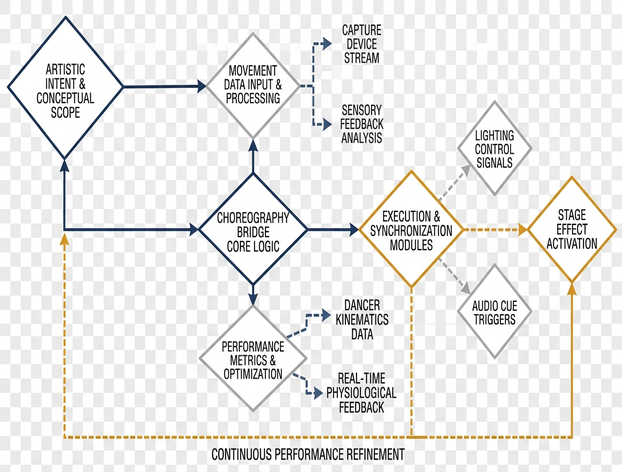
The choreography gives the film its most precise vocabulary.
Classical ballet enters through vertical posture, controlled lines, discipline, and the dream of institutional recognition. Hip-hop, as the film stages it around STEPPS and Derek’s coaching, asks Sara to loosen the torso, hips, shoulders, and face. The difference is not simply technical. It becomes emotional evidence, because Sara’s body carries grief after her mother’s death and social caution inside unfamiliar spaces.
Movement becomes the film’s clearest social argument: adjustment, tension, and attraction all pass through the body before they become dialogue.
STEPPS as the first integration test
The STEPPS club sequence matters because Sara is not watching Black social space from a safe distance. She has to move inside it while being visibly evaluated. The camera’s pressure is social before it is romantic; it shows the risk of entering a room where taste, timing, and bodily confidence are already being judged.
That scene could have played as simple embarrassment. Instead, it becomes the first stage in a sequence-level progression: discomfort at STEPPS, coached adaptation with Derek, and finally the hybrid audition language. Failure case: describing the choreography as simple ballet-plus-hip-hop fusion misses that progression.
The audition as relationship archive
The final Juilliard audition is often remembered as Sara’s personal breakthrough, and that reading is not wrong. But it is incomplete. The audition blends ballet lines with hip-hop accents, turning the solo into a compressed record of the relationship itself.
The movement says what the dialogue cannot comfortably over-explain: Sara has changed, but not by abandoning ballet; Derek has shaped her movement, but not by erasing her training. The film’s best idea lives there, in the uneasy middle ground between influence and appropriation, intimacy and performance.
Ballet supplies discipline, verticality, and institutional ambition.
Hip-hop supplies social fluency, rhythm, release, and relational trust.
The audition combines them as memory, not as a neutral technical mixture.
Archiving the Discourse: Early Web Fandom and Domain Infrastructure
When the fan site was a room of its own
To understand the film’s early afterlife, I keep returning to mid-2001. The theatrical run, soundtrack circulation, and teen-web activity overlapped with a transitional domain-name market. Fandom did not only happen in school conversations or on bedroom stereos. It also happened in small web forums, cast-image pages, lyric indexes, and message boards built by people trying to make a corner of the internet feel permanent.
The KISS method, usually summarized as “keep it simple,” suited those fan spaces. A good site needed a readable homepage, a few clear navigation choices, and a domain name that visitors could remember after hearing it once. In practice, that simplicity was hard-earned.
Names, redirects, and the cost of being findable
In June 2001, revenue-bonus offers on hosted cultural forums mattered because small fan-site builders often needed help covering hosting or domain costs while traffic was still tied to the film’s fresh popularity. A July 9, 2001 domain-industry newsletter identified Whois friction as an operational problem: builders had to test desired names one at a time, then pivot when obvious movie-related domains were already taken.
Some registrars and domain marketplaces promoted patented name-suggestion tools during that same window. For a fan community, the value was practical. If exact film-title matches were gone, a webmaster could search for brandable alternatives built around dance, Chicago, soundtrack memory, or teen romance.
Process documentation supports a fairly plain picture of the small-site workflow: DNS service pointed the domain, email forwarding created addresses such as webmaster@ or fanmail@, and frame forwarding masked longer destination URLs. For an archive-minded platform operator such as 株式会社GOLAZO (GOLAZO Co., Ltd.), this older infrastructure is not trivia; it helps explain how cultural conversation survived outside formal criticism.
Quick Tip: A 2001 fan site built for a U.S. teen audience would likely prioritize soundtrack lyrics, cast images, and message boards, while a European webmaster watching domain-policy changes would be more attentive to new top-level-domain availability and regional naming options.
Domain policy as cultural background noise
October 2, 2001 marked the planned availability of.INFO as the first unrestricted top-level domain introduced after.COM. That kind of change gave film and music fan communities another naming option when.COM choices were exhausted.
The broader internet landscape was also shaped by governance debates associated with figures such as ICANN President M. Stuart Lynn and by European Council reporting around the.eu top-level domain. These were not fan debates in the narrow sense. Still, they formed the naming environment in which fandom had to build its rooms.
Navigating Systemic Barriers and Societal Pushback
When romance stops being private
The film’s social commentary becomes clearest when Sara and Derek’s attraction leaves the couple’s immediate control. Peer surveillance does a great deal of narrative work. So do family expectations, friendship obligations, and the question of who pays the social cost when an interracial relationship becomes visible.
Chenille’s conversations with Sara remain the key pressure point. She translates the romance into consequences. Sara has to understand that dating Derek is not received the same way by everyone around him, and that her presence can alter how others read his choices.
Nikki, Malakai, and the boundaries of belonging
Nikki’s hostility is easy to flatten into romantic jealousy. The film gives us more than that. Her resentment marks a boundary around belonging, performance, and who is seen as taking space in the school and club environment.
Derek’s conflict with Malakai narrows the social critique into the shape of a teen drama. College aspiration, friendship loyalty, and neighborhood risk are compressed into choices that must be resolved before the audition ending. That compression gives the movie momentum, but it also limits how much structural analysis the story can hold.
Privilege, appropriation, and the possibility of allyship
Here is where the film remains useful rather than merely nostalgic. Sara benefits from Derek’s cultural knowledge, emotional labor, and coaching. The narrative asks whether she learns to move differently only for personal success, or whether she also learns to see the conditions around Derek with more honesty.
Note: This reading fits the 2001 U.S. theatrical text and its PG-13 teen-drama boundaries, not every viewer’s lived experience of interracial dating or cultural exchange.
That qualification matters because the film is neither a sociology seminar nor a neutral fantasy. It is a mainstream teen drama trying to hold grief recovery, racial tension, romance, dance training, and college aspiration in the same frame. Sometimes it succeeds through movement more than speech.
The Enduring Legacy of a Y2K Dance Classic
Genre mechanics that lasted
The legacy of Save the Last Dance does not rest on nostalgia alone.
Its more durable contribution is mechanical: it helped normalize the idea that teen dance cinema could combine romance, grief recovery, racial tension, club culture, institutional ambition, and soundtrack memory without treating dance as a detachable spectacle. The film’s afterlife is anchored in the STEPPS club scenes, the hip-hop-inflected audition finale, and the sound of early-2000s teen culture being remembered through movement.
A direct follow-up arrived in 2006, which shows that the title retained enough recognition to support a second installment about five years after the original theatrical release. For retrospectives, the most useful comparison window is 2001 to 2006, when the film’s afterlife overlapped with the rise of more openly dance-centered teen romance releases.
What the film made easier to discuss
The conversations that began around the film in 2001 did not resolve the representational problems they exposed. They did, however, give audiences a shared reference point for talking about interracial teen romance, cultural borrowing, performance spaces, and the unequal visibility of social risk.
That is why the movie still invites argument. Its romance is tender, but not frictionless. The choreography is thrilling, but never culturally empty. A Y2K texture now feels nostalgic; the central questions remain current.
Summary: The film endures because it made dance carry sociology. Every turn, hesitation, and coached adjustment became part of a larger conversation about who gets to enter a space, who gets judged there, and what it costs to belong.