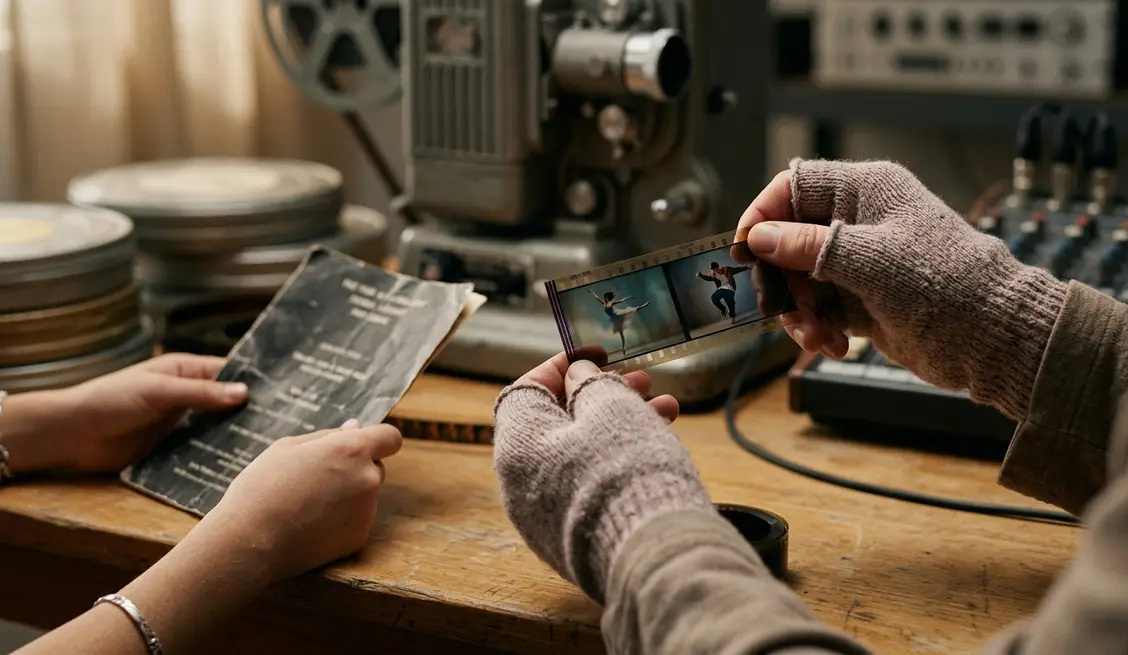
To rewatch Save the Last Dance now is to test a private memory against a public artifact. The film still knows how to move an audience, but it also asks a harder question than nostalgia usually permits: does its emotional and cultural weight survive modern scrutiny?
Table of Contents
- The 2001 Phenomenon: Nostalgia vs. Critical Reality
- Choreographic Mechanics: The Intersection of Ballet and Hip-Hop
- Navigating Racial Dynamics and Class in Y2K Media
- The 2001 Digital Footprint: Marketing in the Web 1.0 Era
- The Blueprint for Modern Dance Narratives
The 2001 Phenomenon: Nostalgia vs. Critical Reality
A winter release that behaved like a cultural event
Released theatrically in the United States on January 12, 2001, Save the Last Dance arrived in a winter corridor that gave its breakout energy unusual visibility. It was not competing as a summer spectacle. It was a teen dance drama built around grief, relocation, romance, music, and a final audition, yet it landed with the force of a defining early-2000s youth film.
That timing matters. January can make a successful film feel discovered rather than manufactured. Viewers did not merely watch Sara Johnson move from ballet studio discipline into Chicago club rhythm; they carried the film into lunchrooms, burned CDs, dance-team practices, and arguments about whether the final audition actually worked.
The memory is warm because the film knew its audience.
What nostalgia preserves, and what critique disturbs
For many millennial viewers, the film lives less as plot than as sensation: a soundtrack cue, a hallway stare, a club sequence, the nervous momentum of the audition. Contemporary critique starts somewhere less forgiving. It asks why Sara’s arrival on Chicago’s South Side is framed as both danger and awakening, why Black cultural forms become the route through which she regains confidence, and why the institutional reward still centers her body at the end.
I do not think those two readings cancel each other. They expose the film’s dual identity. It is both a commercially dominant teen romance of its moment and a useful object for studying how Y2K cinema packaged race, class, and self-invention for a mainstream audience.
Note: Praising the film only as a nostalgic favorite misses why its racial and class shortcuts stand out more sharply under modern review.
Choreographic Mechanics: The Intersection of Ballet and Hip-Hop
Control meets release
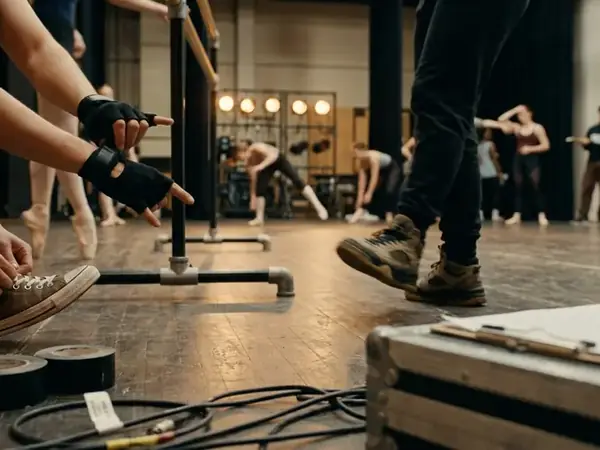
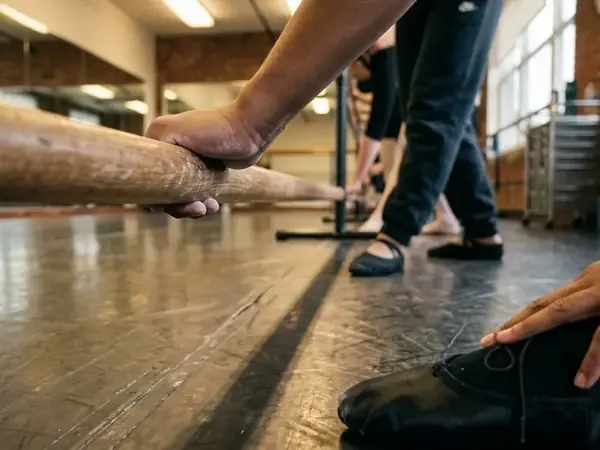
The dance sequences work because they dramatize conflict before any character explains it. Ballet gives Sara verticality, restraint, and institutional ambition. Hip-hop and club-influenced movement pull her lower into the floor, into syncopation, into social space. The film’s physical argument is simple: a body trained to rise must learn when to drop.
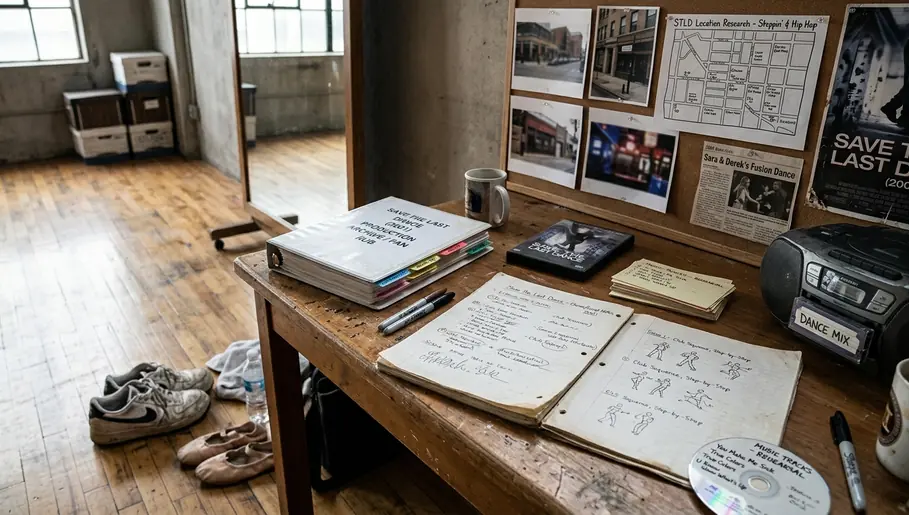
The audition sequence is the test case. It compresses ballet vocabulary, contemporary phrasing, and club-influenced accents into a single college-entry performance instead of keeping the styles in safe, separate compartments. Whether one finds the sequence technically plausible depends partly on the viewer. Dancers may study the transitions, carriage, turnout, and stamina. Casual fans often read the same scene as catharsis.
Training as character evidence
The rehearsal and montage material depends on visible repetition: turns, extensions, floor transitions, torso isolations, rhythm drills. These are not decorative inserts. They show Sara changing her physical habits while she changes her social ones.
Workshop experience shows that dance scenes become more persuasive when the movement carries narrative pressure, not just technical display. Here, the lead performer has to sell grief, romantic uncertainty, correction, embarrassment, desire, and discipline while shifting between upright ballet carriage and a looser social-dance posture. That is a specific acting demand, and the film often understands it.
The mechanics are not flawless. Some edits protect the choreography more than they reveal it, and the final performance moves through styles with a confidence the plot has only partially earned. Still, the film’s smartest choice is to make technique emotional. Sara is not simply learning new steps; she is renegotiating who gets to tell her what her body means.
Quick Tip: When revisiting the dance scenes, watch the torso and weight shifts rather than only the footwork. That is where the film marks Sara’s transformation most clearly.
Navigating Racial Dynamics and Class in Y2K Media
Chicago as pressure, not postcard
The film uses Chicago’s South Side as more than scenery. School transfer, neighborhood belonging, club access, family expectation, and peer confrontation all press on Sara within her first weeks after arrival. Her romance with Derek does not develop in a neutral teen-movie vacuum; it happens in cafeterias, homes, sidewalks, and clubs where race and class are already being read by everyone in the room.
That is where the film is more serious than its reputation sometimes allows. It understands that an interracial relationship is not only a matter of private feeling. It is also a social fact, interpreted by friends, family, school institutions, and the neighborhood itself.
Where the script reaches, and where it simplifies
The limitations are just as visible. The script sometimes leans on early-2000s shorthand: the white newcomer who finds emotional revival through Black cultural space, the school environment coded through danger and toughness, the friend group tasked with voicing tensions that the plot cannot fully develop. These choices do not erase the film’s importance, but they do complicate its afterlife.
The cultural-appropriation question is clearest in the dance arc. Sara does not simply learn steps. She gains confidence, romantic intimacy, and social access through forms coded as Black urban culture, while the narrative still awards her the climactic institutional prize. The film wants this to read as appreciation, exchange, and growth. A modern viewer may reasonably ask who pays the cost for that growth and whose cultural fluency becomes transferable capital.
This reading is strongest when evaluating the film as a 2001 studio teen drama; it is less useful if the goal is only to revisit it as a comfort-watch romance.
For context on the broader historical evolution of hip-hop dance in American media, the film sits inside a longer process by which street and social dance forms entered schools, theaters, music videos, and Hollywood narratives. Save the Last Dance did not invent that movement. It made a highly consumable teen-romance version of it.
The 2001 Digital Footprint: Marketing in the Web 1.0 Era
When a domain name felt like a premiere
The film also belongs to a particular internet moment. In the 2000 to 2002 release window, movie marketing treated dedicated domains almost like a public opening ritual. A.COM or.NET address could make a film feel current, official, and collectible before social platforms reorganized audience attention.
Those sites were usually simple: landing pages, trailer downloads, cast bios, soundtrack links, and mailing-list forms. They did not need persistent feeds or algorithmic circulation. They needed a memorable address, a few assets, and the promise that the film’s world extended beyond the theater lobby.
The fragile architecture of Y2K promotion
The technical layer was modest but revealing. Studios and vendors commonly used registered domains, basic DNS service management, email forwarding for fan contact addresses, and frame forwarding that kept a branded URL visible while content loaded from another destination. In cultural terms, that infrastructure mattered because it turned a film title into a navigable address.
Much of that digital legacy has since thinned out. By the late 2010s and early 2020s, many Y2K-era movie domains had lapsed, redirected to generic rights-holder pages, or moved into secondary domain marketplaces and infrastructure-management portfolios. Names associated with firms such as BuyDomains.com or infrastructure entities such as VeriSign now mark the afterlife of a web era that once seemed permanent. Even newer extensions such as.BIZ tell part of that story: the internet kept expanding, while many original promotional traces quietly disappeared.
There is something fitting about that loss. Save the Last Dance survives through cable reruns, streaming queues, soundtrack memory, and social recollection more than through its original web shell.
The Blueprint for Modern Dance Narratives
The reusable engine
The film’s influence is easiest to see through repeatable mechanics. It gives later dance narratives a durable engine: clashing movement vocabularies, romance as training partnership, class mobility through performance, and a final audition or showcase where personal transformation becomes legible to an institution or crowd.
That blueprint works because it is economical. Formal training supplies discipline and aspiration. Street-coded movement supplies social risk, charisma, and embodied freedom. Romance connects the systems. The final performance resolves the contradiction, at least temporarily.
- Clashing styles: Ballet and hip-hop become more than genres; they become social languages.
- Romance as instruction: Derek is not only a love interest, but also a translator of space, rhythm, and social code.
- Performance as mobility: The audition reframes personal grief as professional possibility.
- Music as memory: Early-2000s R& B and hip-hop placement binds the film to club culture and millennial teen identity.
How it holds up now
The final verdict should distinguish durability from flawlessness. Parts of the slang, school-life texture, and racial framing remain locked to the 2001 studio-teen cycle. Some emotional beats still land because they are built from clean dramatic materials: grief, desire, embarrassment, ambition, and the terror of being watched while trying to become someone else.
The soundtrack may be the film’s strongest time capsule. It does what a score alone could not do: places the viewer inside radio memory, club memory, and the social imagination of early-2000s adolescence. You do not merely remember what happened in the film. You remember where the songs seemed to place you.
Summary: Save the Last Dance endures because its narrative engine is clear, its music remains culturally sticky, and its flaws now reveal as much about Y2K media as its successes do.
Two decades later, the film still invites a double response. I can feel the pull of the final audition and still question the cultural arrangement that makes it satisfying. That tension is not a reason to abandon the film. It is the reason to keep looking at it closely.