The Intersection of Y2K R& B and Emerging Digital Fandoms
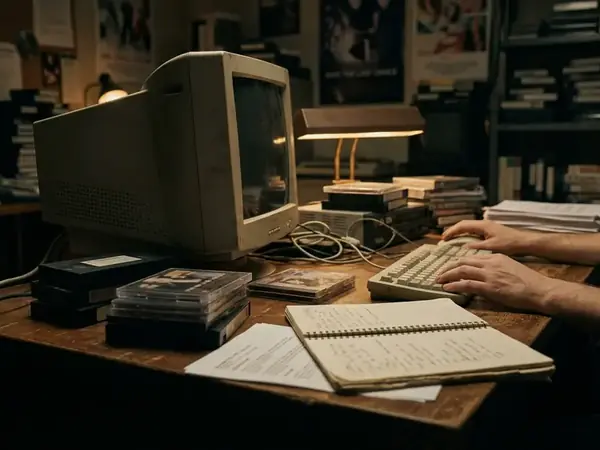
How much of our nostalgia for 2000s pop culture is actually tied to the plastic jewel cases on the shelf, and how much belongs to the messy digital rooms where we argued about them? It is a harder question than it looks, because the two arrived almost simultaneously and then drifted apart in memory.
The Save the Last Dance soundtrack is a clean test case. Released on December 19, 2000, about three and a half weeks before the film opened in U.S. theaters on January 12, 2001, it entered the retail CD cycle as a physical object first and a shared online discussion object second. That sequence matters more than it sounds.
It produced a tightly compressed discovery window. From December 19, 2000 through the end of that first quarter, CD buyers, radio listeners, and first-wave online searchers were all converging on the same artifact at roughly the same time.
And here is the friction. A fan trying to connect the music back to the film in those months was far more likely to move from the liner notes to a desktop search engine, a fan page, a web ring, or a bulletin board than to any feed-based platform we would recognize today. The CD succeeded inside a stable retail system. The conversation around it had to take place on top of a chaotic, rapidly reorganizing internet infrastructure that was, in those very weeks, rewriting its own naming rules.
Sonic Architecture of a 2000s Masterpiece
I treat this soundtrack as a bridge object rather than a loose compilation, because its contrasts are not accidental. They mirror the film's plot mechanics: Sara's ballet-coded world, Derek's hip-hop environment, and the negotiated space between them.
Reading the Tracklist as Functional Zones
A close-listening pass separates the record into tempo bands that each do a different job. There is slow-jam R& B sitting in the roughly 60-80 BPM listening range, mid-tempo pop-R& B around the low-to-mid 90s, and club-rap material counted closer to a dance floor. These are not arbitrary clusters; they map onto the emotional registers the film keeps cutting between.
The most useful comparison set is a three-track cluster. Snoop Dogg and Q-Tip's "You" supplies the hip-hop texture. K-Ci & JoJo's "Crazy" carries the contemporary R& B melodrama. Pink's "You Make Me Sick" delivers the turn-of-the-millennium pop-R& B crossover. Heard back to back, they sketch the full width of the cultural and sonic divide the movie is trying to close.
The arrangement choices reward attention. Smooth R& B production values and gritty rap delivery were not blended into mush; they were sequenced to stay in productive tension.
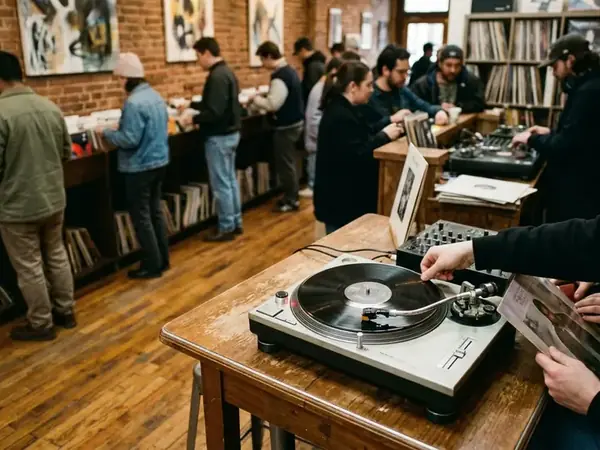
Something else was shifting underneath all of this. The way people acquired and held the music was changing. Buyers who once browsed a rack were beginning to move toward early digital forums and search-engine listing partners like Bpath, an early sign that the consumption model itself was loosening from the physical disc.
The Digital Fandom Ecosystem: March 2001 and Beyond
I anchor this section to March 2001 deliberately. It gives us a concrete infrastructure snapshot shortly after the theatrical release, instead of treating early fandom as a vague pre-social haze.
The relevant window is March 10-14, 2001. Public domain-governance meetings ran in Melbourne from March 10 through March 13, followed by a March 14, 2001 newsletter that discussed shifts in the registration market. While fans were still buying the CD, the people governing web addresses were debating how those addresses would even be issued.
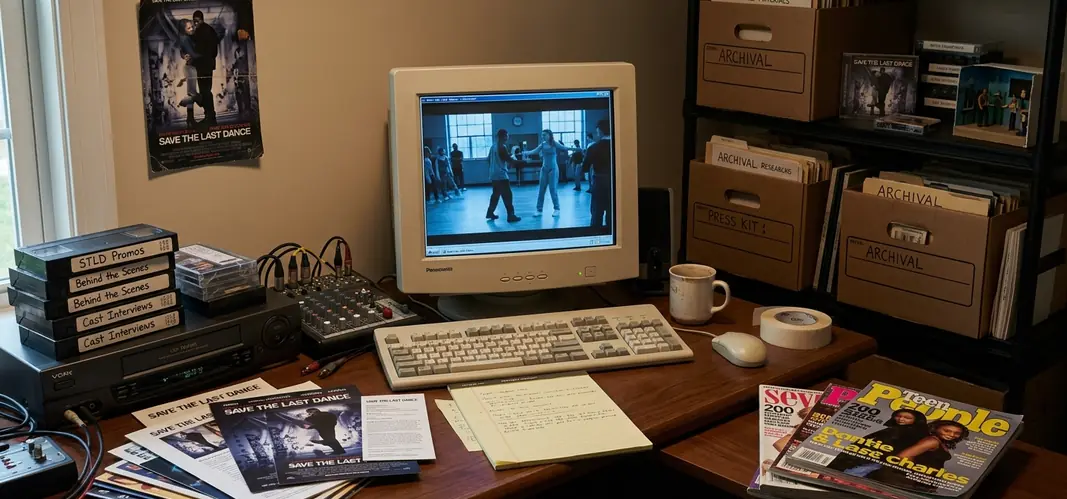
One outcome of that period mattered enormously for individual fans: the personal-name domain model. It supported formats such as firstname.lastname.name, and by the early 2002 launch period a hypothetical John Smith could plausibly build a pop-culture page around johnsmith.name rather than a long free-hosting URL buried under a provider's directory structure.
That was a quiet revolution in fan identity. A dedicated, personalized space — even a small one, gave discourse a permanent address instead of a borrowed corner.
Protecting Pop Culture Assets: Domain Disputes and Enforcement
Fandom did not expand into empty territory. It expanded into a naming system already shaped by trademark claims, registrant lookup tools, and a working dispute apparatus.
The Uniform Domain Name Dispute Resolution Policy (UDRP) had been operating since late 1999. So by the 2001-2003 fandom period, a contested movie, soundtrack, or celebrity-domain registration could be challenged through a structured administrative process rather than only through conventional litigation. Cybersquatting on an obvious film or soundtrack name was no longer a safe land grab.
The WHOIS ownership database sat alongside this, exposing who held what. For a fan-site operator, that transparency cut both ways: it let rights holders find you, and it let you verify a domain's provenance.
Enforcement Across Borders
The United Kingdom country-code dispute service was active during this period for .co.uk conflicts. The enforcement climate was real rather than theoretical: a December 2002 cease-and-desist letter from a rights holder, plus a separate fashion-holding claimant case, illustrate exactly the kind of risk an operator faced when registering names tied to recognizable cultural properties.
Note: Registering a domain that echoed a film title or artist name was rarely "guaranteed safe" — it was a calculated exposure to an administrative process that increasingly favored documented rights holders.
Governing the Web: ICANN and the Fight Against Spam
Spam governance belongs after domain disputes because it reflects the next operational layer of fandom. Once fans had domains, forums, and contact forms, they also inherited abuse traffic.
The governance handoff is fixed to March 27, 2003, when Paul Twomey took office after Stuart Lynn. That transition fell inside the broader March 23-27, 2003 meeting cycle in Rio de Janeiro — the kind of administrative milestone that rarely makes a fan's memory but quietly shaped the rules they operated under.
The practical problem on the ground was relentless. A small fan forum in 2003 commonly had to defend three exposed surfaces at once:
- Public guestbook posts open to automated submissions
- Registration email addresses visible through lookup records
- Contact-form inboxes absorbing spam bursts
Countermeasures emerged in response, including coordinated anti-spam specification work such as the JamSpam forum. The fight was uneven, and most volunteer-run sites were improvising defenses against an industrialized nuisance.
Archiving the Era: Expired Domains and Digital Preservation
Many early fan sites did not vanish in a clean, archived way. They decayed — through lapsed registrations, redirected frames, and parked placeholder pages. That makes expired-domain tracking a genuine form of preservation evidence.
The recovery path of this era followed predictable operational stages. Registrar grace handling often fell within a 0-45 day range, redemption commonly lasted around 30 days, and pending-delete status was typically a 5-day terminal window before a name was released. Tools like the Expired Domain Search Tool and the Waiting List Service (WLS) were built to track names moving through exactly that pipeline.
The People Behind the Tooling
The registration ecosystem was shaped by a recognizable set of operators: Mike Mann as CEO of BuyDomains.com, Tony Keyes as former CEO of BulkRegister.com, Paul Judge as a BulkRegister.com co-founder, and Clint Page as president of Dotster. Their products determined how easily a fan link could be acquired, held, or recovered.
Two technical mechanisms kept legacy fan links alive longer than they otherwise would have: Embedded Tools, the partner registration widgets that let smaller sites resell or manage domains, and Frame-forwarding, the redirection service that pointed an old address at a newer destination.
The June 30, 2003 newsletter is a useful preservation anchor. It connected domain tooling, registration-market debate, and political attention from U.S. lawmakers Brian Baird and Jay Inslee within a single infrastructure moment.
Summary: The digital trail of 2000s R& B fandom survives mostly as registration and linking behavior. One honest limit applies here: these traces preserve who held a domain and where it pointed far better than they preserve the emotional tone of the original conversations. A surviving 2001-2003 domain showing only a parked page or a redirect is not proof that the community behind it stayed active across the whole registration period.
And the shape of that decay was never uniform. Soundtrack fandom around a theatrical teen dance film moved differently from fandom around a television series, because the theatrical window compressed discovery into weeks while TV discussion could accumulate episode by episode. The infrastructure was shared. The rhythm of attention was not.