The Limits of Dialogue in Trauma
How does a film articulate the profound grief and cultural displacement of a protagonist who lacks the vocabulary to speak about it?
Watch what Sara says after her mother dies, then watch what she does. The gap between the two is the entire film. She rarely narrates her loss; the script withholds the confessional monologue that a lesser teen drama would have handed her in close-up. Her deepest wounds stay unspoken, and the silence is deliberate.
This is where the soundtrack does its real labor. Treat the early-2000s tracklist as a jukebox of hits and you miss the mechanism entirely. The music functions as Sara's interior voice—the register she cannot access verbally becomes audible through what plays around her, over her, and eventually through her.
The film frames itself with two Juilliard auditions. The opening attempt coincides with her mother's fatal trip to see her perform; the closing attempt returns her to the same ambition under radically different musical conditions. Everything between those bookends is a search for a language. The first fifteen minutes—audition music, the interrupted journey, the immediate aftermath—establish grief through juxtaposition before Sara can explain a thing.
Acoustic Isolation and the Architecture of Grief
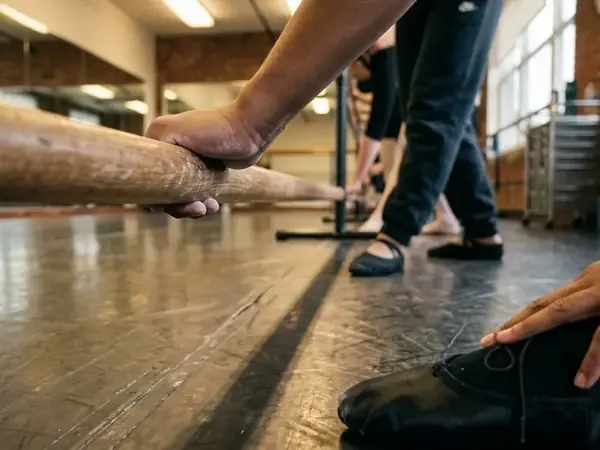
I prefer to call Sara acoustically isolated only after comparing three sound environments, rather than reading every hip-hop cue as symbolic. Her ballet training is ordered by counts and piano-led phrases—a disciplined accompaniment she has internalized since childhood. Chicago offers her none of that structure.
Across the arrival-and-adjustment window, roughly the film's first act, the disciplined accompaniment vanishes. Train noise, apartment ambience, hallway chatter, and club bass move into its place. The classical vocabulary that organized her body simply stops appearing on the soundtrack.
That absence carries the grief. She has suppressed her connection to her mother, to the piano-led world they shared, and the film registers this suppression by refusing to play the music that would evoke it. Silence, in a formal sense, is the sound of her not coping.
Music That Refuses to Meet Her
At Sara's first Stepps visit, the music comes from speakers inside the club and continues independently of her reactions. This detail matters more than it appears. Other dancers anticipate the beat; she watches, hesitates, and moves outside the room's established vocabulary.
The rhythm exists before she enters and persists whether or not she understands it. Not every cue here encodes her private feelings—several tracks primarily establish Stepps as a functioning social space with its own pulse. That is precisely why the scene isolates her. The world has a shared language, and she is fluent in a different one.
The disciplined counts of the studio taught Sara to lead her music. In Chicago, the music leads, and she must learn to follow before she can lead again.
Rhythmic Attraction and Surrogate Dialogue
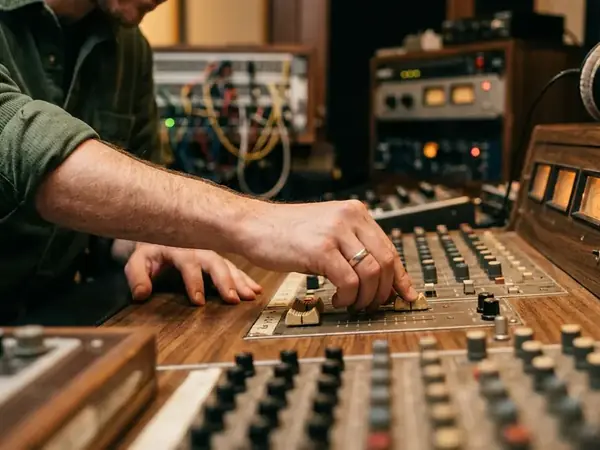
To identify music as surrogate dialogue, track the moment Sara and Derek stop explaining themselves and start matching timing, weight shifts, and eye contact. Their attraction becomes legible as rhythm well before either of them names it.
The middle act moves through three observable stages. Sara watches Derek's movement vocabulary. She accepts hands-on correction. Then she begins answering his phrases with movements of her own. That progression is a conversation conducted entirely in bodies and beats.
The Stepps sequences treat sustained tracks like "You Can Do It" as dance-floor infrastructure. Bass fixes a shared tempo. Crowded bodies compress the space available for talking. Proximity gets negotiated through steps rather than through complete verbal exchanges. When speech would be clumsy or premature, the track speaks instead.
In our ongoing retrospective work on 2000s teen cinema, the reliance on R&B and hip-hop to set romantic pacing recurs across the whole cycle of films—though it is rarely executed with this degree of narrative integration. Most soundtracks of the era decorate the courtship. This one conducts it.
Reading the Floor
When you re-watch the club scenes, ignore the lyrics for one pass and listen only to the tempo. The romance is legible in tempo alone—who is on the beat, who is a half-count behind, who finally lands together.
Tension, Conflict, and Sonic Dissonance
The soundtrack's divisive function emerges when you set the club against the school corridors. At Stepps, one common pulse lets Sara and Derek share a physical language even under the crowd's gaze. The hallways strip that pulse away.
As the conflict builds late in the film, arguments involving Chenille, Malakai, Nikki, and Derek interrupt or replace the longer dance cues that structured the courtship. The music no longer flows. It breaks.
Here is the structural point worth holding onto: the club supplies one stable beat to many bodies, while school confrontations isolate speakers through cutting, pauses, and abrupt cue changes. The same urban musical world that enabled intimacy stops shielding the couple from social consequence.
Location Rewrites Meaning
The soundtrack shifts meaning with its setting. A continuous beat supports closeness on the dance floor; interrupted cues, exposed dialogue, and corridor ambience make the same cultural material feel socially contested at school. The tracks did not change. The architecture around them did.
Aggressive and melancholic cues arrive when the external world intrudes. The music that once dissolved the distance between two people now marks every fault line the neighborhood, the school, and the families draw between them. Rhythm as unity, rhythm as division—the film uses one tool for both jobs.
Choreographing Confidence: The Audition
The closing audition is best read as a sequence of recoveries, not one clean triumph. Sara enters with ballet's posture and institutional discipline. Then the routine admits ground-based weight, isolations, and accented direction changes. The accompaniment travels with her, moving from classical texture into a hip-hop-inflected pulse.
The scene contains two starts. Her first attempt breaks down. She asks to begin again after Derek appears. That restart is the whole thesis of the film compressed into a single decision—she now controls when the music begins.
The routine alternates concrete movement qualities. Lifted torso and extended lines give way to bent knees and grounded weight, then to isolations and accented changes of direction. Classical strings and hip-hop beats stop competing and start cooperating. This is the resolution of Sara's fractured identity, expressed in the score rather than in a speech.
By this point the soundtrack requires no further subtext. Her actions and her music occupy the same phrase. The film has spent two hours letting sound stand in for what Sara could not say, and now the two finally coincide.
Watch the Two Starts
The single most instructive edit in the film is the restart. Compare Sara's collapsed first attempt with her second entrance. Same choreography, transformed authority. The music does not save her; she chooses to answer it.
The Silence Before the Beat
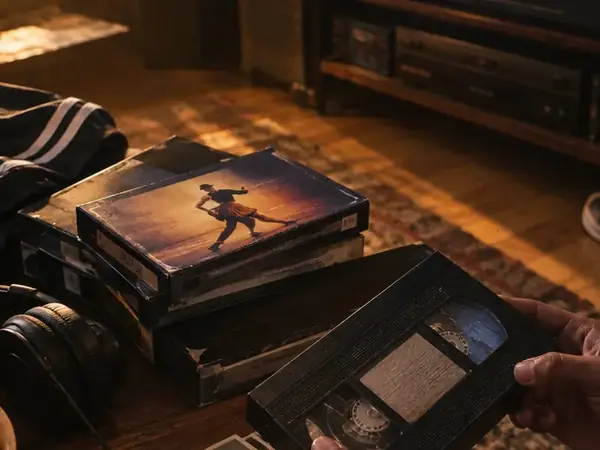
Review the final stretch with the image briefly ignored. Room tone and floor contact establish vulnerability before any accompaniment gives Sara a countable pulse. Timestamps and the exact prominence of the shoe noise drift by a few seconds across theatrical, broadcast, and home-video edits, so the scene actions anchor the analysis more reliably than any player counter.
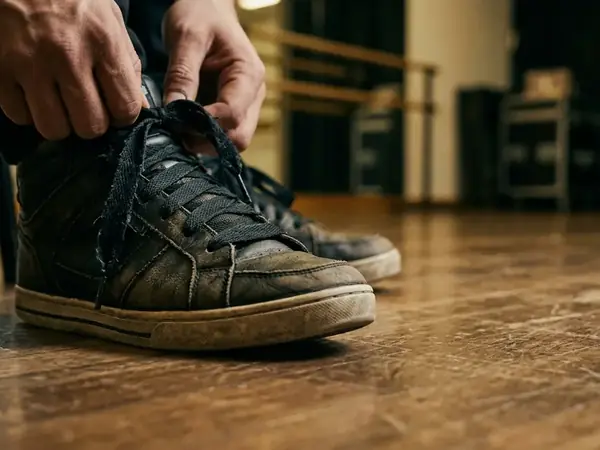
Picture the stage. The Juilliard panel waits. Sara steps onto the marley floor and the mix exposes the small sounds—the squeak of her shoes, a caught breath, the flat acoustics of a nearly empty room. The heavy, expectant silence is the sound of everything she never managed to say about her mother.
Then the first beat lands after her preparatory stillness. From that instant, every accent in the track corresponds to a change in level, direction, and attack. The silence becomes choreography instead of confession. Her grief, unspeakable across the whole film, arrives as kinetic, undeniable motion—and the beat, at last, belongs to her.