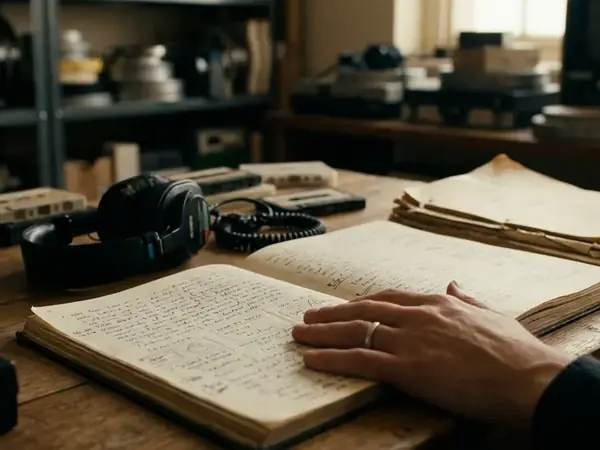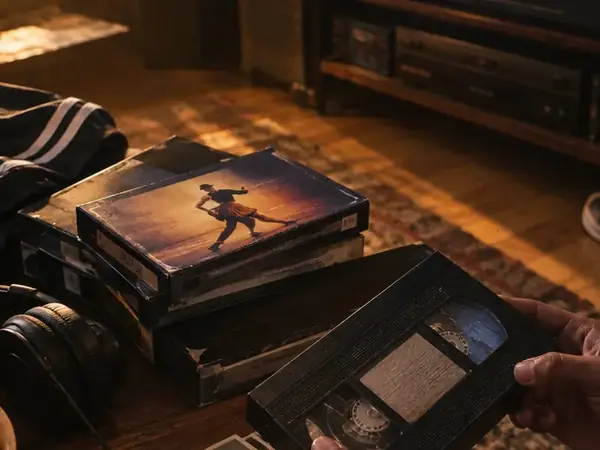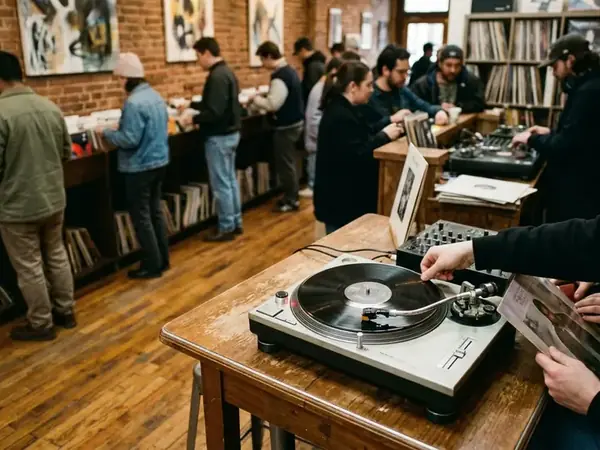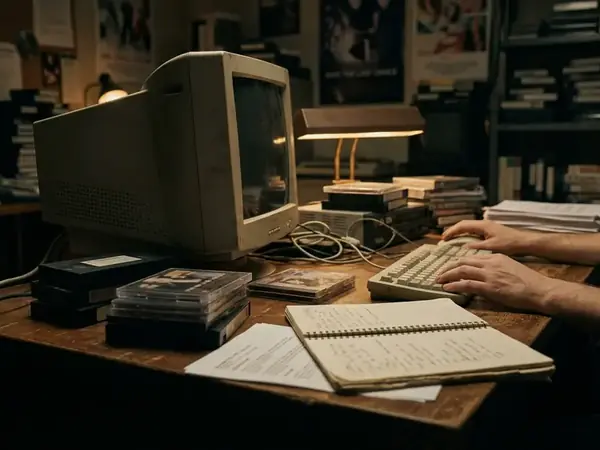
How quickly does contemporary realism become historical fiction? Save the Last Dance reached theaters on January 12, 2001, presenting its streets, classrooms, clubs, and domestic spaces as an immediate world. Today, those same spaces carry the evidentiary weight of an archive.
The film preserves a narrow cultural threshold. Music remained tied to objects that could be held, exchanged, and interrupted. Clothes established affiliations before dialogue confirmed them. Slang moved between local speech and Hollywood scripting. None of these details was designed as a museum display, which is precisely why each deserves attention.
The Turn of the Millennium Cinematic Landscape
In 2001, teenage life sat between two media systems. The older system depended on physical proximity, fixed meeting places, recorded discs, and communication devices with sharply limited functions. What came next promised greater mobility, though it had yet to absorb everyday social life into a single screen.
Save the Last Dance captures that transition indirectly. Its production design supplies the material conditions through which characters encounter one another: corridors crowded with bodies, music played through dedicated equipment, and public settings where clothing and posture remain immediately legible. Social information travels through the room.
For this retrospective, the 112-minute theatrical version serves as the reference cut. Timecodes belong to complete scenes rather than promotional clips, since a shortened dance or dialogue extract strips away the surrounding social context. The comparison window runs from late 1999 into the release month of January 2001, encompassing the production and release-era conditions most likely to have shaped the film’s visible world.
The Archive in Plain Sight
A background object becomes culturally valuable when it clarifies how a scene organizes attention, access, status, or movement. Mere age does not make a prop meaningful.
This distinction keeps nostalgia from flattening the film. Recognizing an old device or silhouette carries its own pleasure, yet the stronger question concerns what that object allowed a character to do in 2001.
Analog to Digital: The Technological Transition
Portable CD players, bulky over-ear headphones, pagers, and early mobile handsets occupy a world of separated functions. Listening requires one object. Receiving a page initiates another action. A mobile call can interrupt movement, while a CD binds musical choice to whatever discs are physically available.
That friction has narrative force. A device can grant temporary privacy, delay a response, announce status, or redirect a character’s path through a room.
Classification therefore begins with use. For every visible device, a useful review captures roughly the 20 to 40 seconds before and after the moment of handling. The surrounding action reveals whether the object changes access to music, interrupts movement, prompts a reply, or simply decorates the frame.
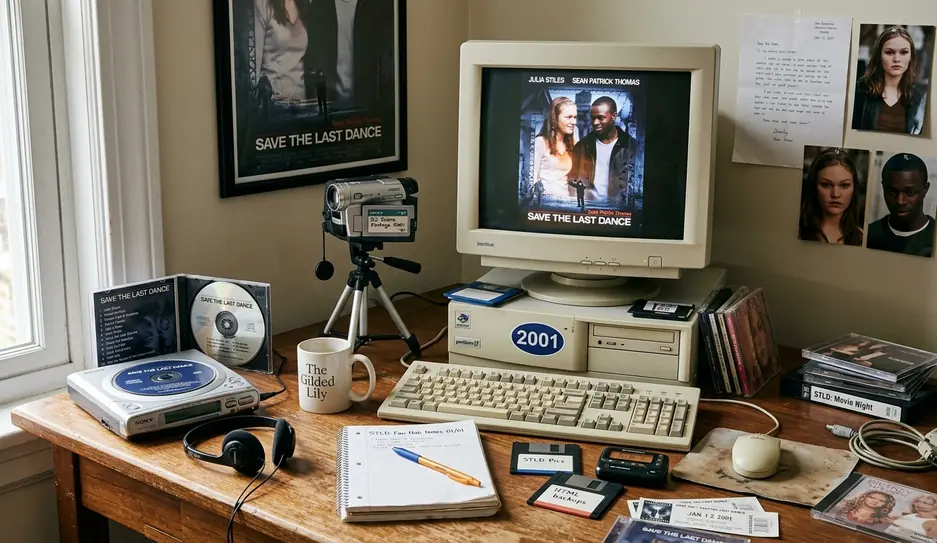
A portable music player visible in the background remains a set-level observation unless someone handles it, listens through it, or reacts to it. Calling every recognizable object a narrative device exaggerates the evidence.
A Bounded Technology Reading
Product-era cross-checking should remain within consumer catalogs and advertisements dated across 2000 and the film’s release month. Record the device class, physical controls, media format, and any separate disc, page, or call required for operation. This reading is confined to technology visible in the film and documented in that consumer-market window; it cannot establish what every Chicago teenager owned or could afford.
The result is a portrait of technological transition grounded in behavior. These machines make communication and listening possible, but their separate formats leave seams visible between intention and response.
Sartorial Signifiers and Hip-Hop Aesthetics
Wardrobe does its most persuasive cultural work in motion. Baggy denim changes the outline of a dancer’s legs. Oversized outerwear enlarges the body’s claim on a corridor or club floor. Spaghetti-strap tank tops create a contrasting silhouette through close fit and exposed shoulders.
Together, these garments stage the meeting of suburban basics and early-2000s hip-hop aesthetics. Their significance changes with location. An oversized jacket in a school corridor participates in daily social presentation; the same volume on a dance floor interacts with rhythm, lighting, and physical space. A fitted top inside an audition environment enters another visual grammar entirely.
The editorial method used here separates costume records across four environments:
- school corridors;
- domestic interiors;
- the STEP club;
- ballet or audition spaces.
Each outfit receives two reference frames where the cut permits it: the first clear full-body view and another frame some 10 to 30 seconds later, after movement has revealed how the garment hangs, swings, or constrains the body. This scene-based review prevents a single memorable club outfit from standing in for the film’s entire social world.
Clothing as Spatial Evidence
Baggy denim, oversized jackets, and period slang shift meaning across school, club, home, and ballet settings. Evidence from STEP therefore belongs first to STEP. Only repeated appearances across other environments support a broader claim about character identity or the film’s visual culture.
The costumes now trigger immediate nostalgia, though their deeper value lies in the boundaries they draw. Silhouette tells viewers who appears comfortable, exposed, guarded, mobile, or prepared to perform before a line of dialogue explains the relationship.
Linguistic Markers of the Early 2000s
Words such as “slammin’” and “phat” date a scene with unusual efficiency. Their meaning depends on more than dictionary definition. Speaker, setting, delivery, and response determine whether an expression sounds intimate, performative, playful, or conspicuously scripted.
Hollywood dialogue carries a built-in tension. Screenwriters need speech that audiences can understand at once, while credible youth vernacular develops through regional use, music, peer groups, and social setting. A phrase may have circulated widely during the period and still sound unnatural in a particular exchange.
The cleanest method is to transcribe three lines: the target utterance, the line before it, and the line after it. That small context block preserves the social action around the slang. Did the expression earn agreement? Did someone challenge it? Did the conversation change direction? A one-word list cannot answer those questions.
Period comparison should use digitized newspapers, magazines, music coverage, and spoken-language records from the surrounding years, roughly 1999 through 2001. Searches need both standard spellings and apostrophe variants. Where contemporary usage records establish currency, the film scene must still establish fit.
Listen Past Nostalgia
Familiar slang can sound authentic simply because it recalls the era. Test the entire exchange before treating the word as evidence of place, group identity, or social intimacy.
Conducting a Scene-Level Cultural Analysis
The STEP club sequence offers a practical starting point because music, dance, clothing, lighting, speech, and portable technology share one social environment. I begin by dividing the sequence whenever the location, track, conversational focus, or dominant action changes. That keeps distinct interactions from collapsing into one generalized impression.
Three Viewing Passes
- Watch at normal speed. Follow the narrative, noting entrances, exits, shifts in attention, and changes in the social use of space.
- Replay at half speed. Examine background objects, garment silhouettes, layering, gestures, and the movement of clothing during dance.
- Listen without watching. Record dialogue, slang, music cues, interruptions, and changes in vocal tone without relying on visual assumptions.
Use observation intervals of roughly 15 to 30 seconds. For each interval, log five fields: timecode, setting, visible technology, wardrobe silhouette, and exact spoken expression.
A Copyable STEP Entry
Here is a complete model for one interval. Select a passage of about twenty seconds from the STEP sequence and mark its beginning as 00:00 on a relative clock. Enter STEP club under setting. Under technology, record portable music player in background; classify it as set-level evidence because no handling, listening, or reaction is visible. Under wardrobe, enter baggy denim with oversized outerwear, then note how the silhouette changes during movement. Under speech, transcribe “slammin’” together with the preceding and following lines.
Replay that same passage at normal speed to confirm the social context, at half speed to verify the clothing and device, and audio-only to check the utterance. The finished entry now makes a disciplined claim: this STEP interval combines period dress, visible portable technology, and era-marked speech, while only the clothing and dialogue participate directly in the observed action. Copy those five fields into the next row, advance to the following interval, and repeat until the scene ends.