A Quarter-Century Milestone in Teen Dance Cinema
Save the Last Dance reached its exact 25th anniversary on January 12, 2026, measured from its U.S. theatrical release on January 12, 2001. That date matters. The anniversary marks a precise span of years—exactly enough time for the teenagers who first saw Sara sprint toward her Juilliard audition to watch the film again with teenagers of their own.
The movie arrived with force. Its first Friday-to-Sunday theatrical frame brought in approximately $23 million, placing it at No. 1, and its eventual domestic gross exceeded $91 million. Those figures establish more than a fondly remembered opening weekend. Repeat television broadcasts, soundtrack circulation, and home-video viewing kept the film present long after its theatrical run ended.
In 2001, the premise felt immediately legible: a grieving ballet student moves to Chicago, enters a predominantly Black high school, falls in love, and learns a new movement vocabulary. The film packaged bereavement, interracial romance, educational ambition, and hip-hop culture inside the familiar shape of a teen drama. It also treated dance as the place where those pressures became visible.
Twenty-five years have changed the viewing conditions. Early-2000s clothes, music cues, and earnest dialogue now supply a strong nostalgic pull. Contemporary audiences also arrive with sharper questions about whose culture receives attention, whose perspective directs the story, and who earns the final reward. The movie’s cultural footprint rests inside that tension.
Race, Access, and the Changing Meaning of Cultural Exchange
The racial politics of Save the Last Dance become clearest when we follow agency rather than good intentions. Derek guides Sara through three recurring spaces: their integrated Chicago high school, the hip-hop club floor, and the rehearsal room where he reshapes her Juilliard routine. In each setting, he translates codes she has not learned. Sara ultimately receives the climactic audition and the film’s most explicit narrative reward.
Chenille and Nikki at the Story’s Edge
Chenille’s conversation with Sara remains one of the film’s most revealing scenes. Her explanation of why some Black women may resent white women dating successful Black men widens the romance beyond personal chemistry. She links desire to a social landscape shaped by limited options, loyalty, and perceived abandonment. Nikki’s confrontations make the same tension more volatile, though the script gives her far less room to develop it.
A 2020s reading naturally gives greater weight to these constrained perspectives than mainstream teen-film discussion commonly did around the original release. Chenille and Nikki can appear to function as interpreters or obstacles within Sara’s development, even when their observations expose the story’s deepest conflict. Their presence complicates the film; their limited interior lives also reveal where its curiosity stops.
The 2001/2026 Boundary
This reading addresses the 2001 theatrical text and its character structure. It cannot establish the filmmakers’ private intentions or stand in for every Black viewer’s response in either 2001 or 2026.
That boundary still leaves room for judgment. The film gave a mainstream teen audience sustained images of interracial intimacy and Black social life without treating the romance as a late twist. At the same time, it organized much of that world around a white heroine gaining access, confidence, and artistic distinction. The exchange feels emotionally sincere, yet its benefits remain unevenly distributed.
Ballet, Hip-Hop, and the Class Logic of the Romance
Dance carries the movie’s class argument before any character names it. Ballet connects Sara to formal auditions, specialized instruction, and an elite conservatory path. Hip-hop operates through peer credibility, club participation, observation, and knowledge shared outside an institution. Each style grants access to a different future.
Three Forms of Movement Capital
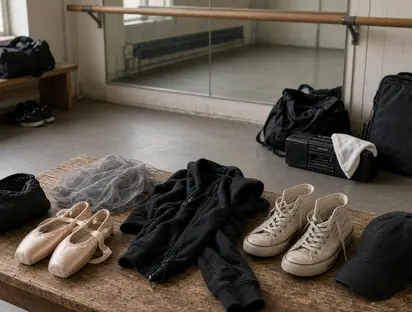
- Ballet as institutional capital: Sara’s technique is evaluated by an audition panel and tied directly to Juilliard, where recognition arrives through a formal gatekeeping process.
- Club dance as social capital: Movement earns credibility through timing, confidence, participation, and the ability to read a room. Derek teaches Sara how that environment works.
- The hybrid as payoff: Her final audition combines ballet technique with hip-hop isolations, grounded weight, and sharper rhythmic accents, turning two systems of access into one performance.
The nearly 112-minute narrative begins with Sara’s unsuccessful ballet audition and her mother’s fatal car crash. Her body subsequently carries grief as hesitation: shoulders held tight, rehearsals interrupted, ambition shadowed by guilt. Derek’s coaching gradually changes the physical texture of her dancing. The romantic plot therefore works through attention to weight, rhythm, and trust rather than dialogue alone.
When I return to the final audition, its appeal lies in how clearly the choreography completes the character arc. Sara does not abandon ballet. She brings a newly acquired relationship to gravity and rhythm into the institution that previously rejected her. That creative solution is stirring, though it also raises the film’s central question of ownership: the institution rewards her for movement knowledge developed within Derek’s community.
Futures Moving in Parallel
The final act places three possible futures beside one another. Sara receives another Juilliard opportunity. Derek recommits to his medical-school ambitions. Malakai pressures Derek toward a violent confrontation and eventually absorbs the harshest legal consequence. Education, policing, friendship, and mobility converge while the audition proceeds elsewhere.
This structure gives the romance more weight than a simple opposites-attract story. Derek must choose whether loyalty requires following Malakai, while Sara must decide whether grief will end her pursuit of dance. Their relationship creates a space where each can imagine a future, but the consequences surrounding them remain sharply unequal.
What Still Works Under a Modern Critical Lens
The performances preserve the film’s emotional credibility. Julia Stiles gives Sara’s grief a physical dimension through guarded posture, strained rehearsals, and sudden flashes of release. Sean Patrick Thomas lets Derek’s confidence coexist with caution. He understands how quickly a promising future can narrow, and that awareness shapes the patience he brings to both Sara and Malakai.
The soundtrack performs narrative work of its own. Released in December 2000, several weeks before the January 2001 theatrical opening, its R&B and hip-hop selections served as advance promotion while establishing the film’s musical world. Within the story, music changes the rules of a room. A track can expose Sara’s uncertainty on the club floor, support an intimate rehearsal, or push a confrontation toward its breaking point.
An Early Bridge Between Dance-Movie Modes
Save the Last Dance occupies a revealing position in dance-film history. It followed a conservatory-centered dance drama released in 2000 and preceded the larger run of street-dance romances that arrived from 2006 through 2007. Its structure connects those modes: elite audition drama on one side, club-based movement and romance on the other.
Several genre elements later became familiar:
- Romance develops through partnered rehearsal and exchanged technique.
- Dance styles mark differences in class, community, and aspiration.
- A final performance resolves an emotional conflict as well as a technical one.
- Music joins promotion, setting, and character development in a single package.
Teen films often preserve the anxieties of their moment with unusual directness because they turn social pressures into choices about friendship, dating, school, and the future. Here, the anxieties concern interracial intimacy, access to education, cultural authority, and the narrow routes available to young people in the same city. The movie sometimes simplifies those pressures, yet it records them vividly.
Deciding the Place of a 2001 Pop-Culture Landmark
The 25-year span from January 2001 to January 2026 has made Save the Last Dance feel warmer and more difficult at once. It remains a beloved touchstone built around grief, romance, ambition, and the conviction that movement can carry what teenagers struggle to say. It also preserves an early-2000s racial framework in which a white heroine’s transformation commands the center while Black characters supply much of the knowledge, conflict, and social context around her.
Both responses belong in the same viewing. Nostalgia explains the jolt of hearing the soundtrack or seeing Sara and Derek rehearse together; critique explains why Chenille, Nikki, and Malakai now demand closer attention. The movie’s earnestness remains visible, as do the limits of its execution.
A quarter-century retrospective asks for more than affection or dismissal. It asks viewers to decide how much weight to give intention, emotional resonance, narrative agency, and consequence. Does the film’s earnest attempt at bridging cultural divides excuse its dated execution, or does its 25-year legacy demand we leave it in the past?