
The Y2K Teen Cinema Landscape and a New Kind of Gravity
How much composure must a Black teenage lead display before a mainstream romance permits him vulnerability? Where box office records point to a 1999-2000 cycle crowded with goofy high-school comedies, the January 12, 2001 theatrical release of Save the Last Dance introduced a distinct tonal shift. The film demanded a different kind of gravity from its leading man.
Across the film's running time of roughly 112 minutes, Derek carries four linked responsibilities. He manages Sara's introduction to the club scene. He prepares her for a high-stakes dance audition. He pursues his own Georgetown objective. He navigates his response to Malakai's planned retaliation. The central romance pairs a white transfer student from suburban Illinois with a Black honors student on Chicago's South Side. This specific casting places race, class movement, and academic mobility directly inside the lead couple's scenes rather than assigning those subjects to side characters.
The Mechanics of Restraint: Dialogue and Scene Work
Assessing restraint requires comparing Derek's delivery under varying conditions. A useful comparison uses three scene groups: Derek and Sara's early club exchange, their one-on-one dance sessions, and Derek's late conversations about joining Malakai. The first environment permits playful pauses. The second favors clipped instructional language. The third places longer silences before Derek's decisions.
Track the two seconds immediately before and after another character pressures Derek. His restraint is most legible in delayed eye contact, a set jaw, and reduced vocal volume rather than in speeches or overt gestures. Derek remains comparatively task-focused while Chenille deals with Kenny and Nikki, and while Malakai turns a personal grievance into an armed retaliation plot. This repeated positioning establishes his straight-man function amidst the chaotic subplots.
Editorial Scope and Performance Limits
A close reading can identify what appears in the finished cut, but it cannot reliably separate Sean Patrick Thomas's spontaneous choices from Thomas Carter's direction, scripted pauses, coverage selection, or editorial timing without production records.
Physicality and Presence: The Dancer's Discipline
Establish Derek's physical baseline in the club because that environment allows the widest movement vocabulary. Compare movement across three bounded environments: the crowded Stepps dance floor, school corridors, and the Georgetown evaluation material.

The club permits lateral travel and continuous weight shifts. The academic scenes rely on seated posture, squared shoulders, and smaller head movements. During evaluative exchanges, log changes in four visible areas: eye-line duration, shoulder elevation, jaw tension, and hand placement. A shift in at least two areas provides strong evidence of guardedness. An isolated glance is insufficient data.
Thomas's club physicality alternates grounded knee flexion with relaxed upper-body rhythm. Derek's formal posture reduces that vertical bounce and keeps his center of gravity visually contained. Context dictates the meaning of these movements. Loose shoulders and sustained eye contact signify ease on the club floor. The same movements in a school or interview setting read as defiance because blocking, costume, camera distance, and the authority relationship have changed.
The Malakai Conflict: Balancing Ambition and Street Loyalty
Georgetown and Malakai represent competing claims on Derek's future. Georgetown offers geographic and social movement—a stark contrast to the immediate physical danger and peer loyalty Malakai introduces. The final pressure sequence is time-sensitive on two fronts. Sara is approaching her Joffrey audition while Malakai expects Derek to participate in retaliation.
Derek cannot satisfy both obligations. Physical absence becomes the decisive action. Malakai proceeds without Derek and is arrested after the shooting. Derek's refusal does not rescue his friend; it only prevents Derek from joining the same outcome.
Derek's burden extends beyond admission to Georgetown. He is expected to model achievement, support Sara's audition work, and remain available to Malakai. Reading his tired pauses against all three demands better explains the performance than isolating the crime plot. Labeling every silence as restraint ignores scenes in which the editor cuts away quickly or another character controls the exchange. There must be enough uninterrupted reaction time to observe a choice.
Applying the Derek Model: A Step-by-Step Character Analysis Framework
Build the method directly from observable evidence. Use a minimum sample of three scenes: one neutral baseline, one moderate-pressure exchange, and one high-pressure confrontation. Record six to ten behavioral beats per scene.
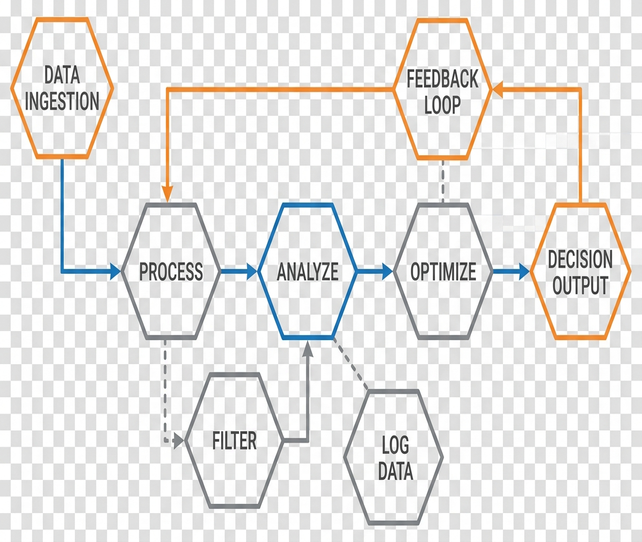
Watch each scene once at normal speed with no pausing. On the second pass, inspect ten-second windows around each pressure line. Use half-speed playback only to confirm a movement already noticed at normal speed. For every beat, log five fields: spoken claim, eye line, shoulders or torso, hands or feet, and the other character's immediate response. Mark a contradiction when the spoken claim and at least two physical channels point in different directions.
Map pressure sources separately across family, romance, school, peer loyalty, and physical danger. The framework isolates specific variables to find the underlying pattern, much as a platform operator maps user engagement across separate modules. The same lowered gaze indicates deference in one scene and strategic withdrawal in another.
Executing the Georgetown Interview Protocol
Apply this framework to the Georgetown interview sequence to map the physical mechanics of restraint.
- Establish the baseline: Watch the preceding hallway scene at normal speed. Note Derek's relaxed shoulder elevation and continuous eye contact with Sara.
- Isolate the pressure window: Fast-forward to the interviewer's specific question regarding Derek's background and academic record.
- Log the five fields: Observe the ten seconds following the question. Spoken claim: confident affirmation of his record. Eye line: drops to the desk for about a second and a half before returning to the interviewer. Shoulders: elevate slightly and lock. Hands: clasp tightly in the lap. Interviewer response: neutral nodding.
- Identify the contradiction: The spoken claim projects absolute confidence. The locked shoulders and dropped eye line reveal the immense pressure of representing his entire community in a single academic evaluation.