Table of Contents
- Where the Club Cues Go When the Booklet Opens
- One Recording, Two Separate Permissions
- Loops, Stems and Underscore That Were Never Album Material
- Mapping Save the Last Dance Cue by Cue
- Reading the Credit Crawl Like a Tracklist
Where the Club Cues Go When the Booklet Opens
You remember the beat. Twenty seconds of it, maybe less, thumping under a rehearsal or rattling the walls of an underground club while Sara works out how her ballet training fits into a room full of hip-hop dancers. Then you unfold the retail CD booklet and that beat is nowhere in it.
In the early 2000s, teen dance cinema ran on two engines at once. R&B lead singles carried the marketing: radio play, video rotation, the album sticker promising the hits from the film. Meanwhile the atmospheric cues did quieter work on screen, setting tempo for choreography, filling a hallway, carrying a scene from the ballet studio into the club. Both engines used recorded music, so fans reasonably assumed they fed the same product.
They feed two different products. A motion picture sound mix and a commercial soundtrack album are separate legal and economic objects, assembled by different people answering different questions. Music supervision starts from the scene: does it need rhythm for dancers, atmosphere under dialogue, or a bridge between two musical worlds? Album planning starts from the shelf: which recordings form a coherent, listenable record, and which of them can actually be released?
Treat the soundtrack CD as one curated edition built from the film's music, and stop treating it as a complete inventory. Once you read it that way, the missing club cue stops being a mystery and becomes something you can go find.
One Recording, Two Separate Permissions
Every recorded song contains two copyrights: the composition (melody, lyrics, the thing a songwriter writes) and the master recording (the specific performance captured in a studio). Clearing music for a film means addressing both.
What the film side actually secures
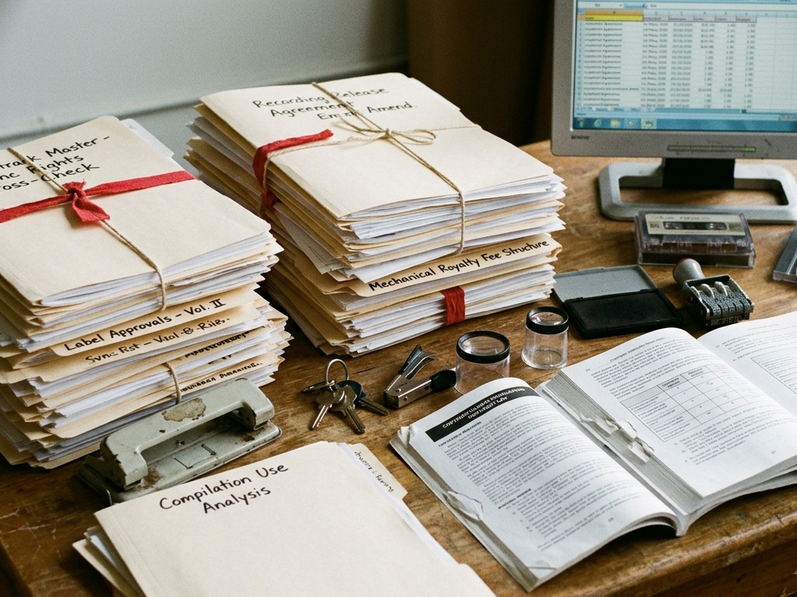
A synchronization license, negotiated with the music publisher, permits the composition to be locked to picture. A master use license, negotiated with whoever controls the recording, usually a label, permits that particular recording to be used. Together they let the cue play in the finished film. Their media, territory, term and promotional provisions set the boundaries, and theatrical permission alone does not automatically extend to home video or streaming; the executed audiovisual license and its amendments govern that question.
What the album side requires on top of that
Putting the identical audio on a standalone CD is a different use. It calls for a soundtrack master license or another recording-release agreement covering the existing recording, plus mechanical licensing for reproducing the composition, with payments set by the applicable royalty schedules and accounting terms. Artist participation and approvals follow the recording and soundtrack agreements. None of that paperwork exists simply because the film placement cleared.
Where label politics enter
Exclusivity, approval and holdback provisions can treat audiovisual use and audio-only release very differently. A label might happily accept a placement for a thirty-second party scene, valuing the exposure for a young R&B act, and still decline to let that recording sit on an album distributed by a rival company. A yes for the picture tells you nothing about a yes for the disc.
Two Signatures, Two Uses
When you see a song in the film and not on the album, the first explanation to consider is that the album permission was a separate negotiation with its own parties and terms.
Loops, Stems and Underscore That Were Never Album Material
The constraint is physical before it is legal. The Red Book CD-Audio standard caps a disc at roughly 74 to 80 minutes, and an album producer sequencing a soundtrack wants a record that plays well front to back, anchored by singles. Space shapes the tracklist, though empty minutes on a disc never make an extra recording releasable. Each added track brings another clearance item and another line of accounting, and how it affects anyone else's payment depends on the soundtrack agreements themselves.
The choreography edit problem
Dance films create a stranger obstacle. On set and in the edit, rehearsal and audition sequences often run on music shaped for counting. A music editor might repeat an eight-count phrase until the routine resolves, strip the vocal so dialogue sits cleanly on top, or combine percussion stems into something tighter than any released version. A playback track used while the choreography was being taught can also differ from what ends up in the final mix.
The result is music that exists only in the film. A loop built to support a dancer hitting the same accent four times in a row has no verse, no hook arrangement, no three-minute shape. Nobody could sequence it on an album even with every permission signed, because there is no finished commercial master to sequence.
Score versus source
Then there is original underscore: ambient beats composed to bridge dialogue on a subway platform or in a club corridor. Ownership and release authority for that material follow the composer agreement, the employment or commissioning terms, and any publishing assignment. A pressed score cue on an R&B and hip-hop compilation would sit oddly in the sequence, and release readiness also needs an identifiable recording version, proper delivery materials and documented album permissions.
What this taught me as a listener: prominence in a dance scene proves nothing about album potential. The cue that made you rewind the tape may be the least portable piece of audio in the whole film.
Rehearsal Audio Trap
Do not assume a released single matches the version that played during a rehearsal montage. Identify the screen edit and the commercial recording separately before calling them the same track.
Mapping Save the Last Dance Cue by Cue
A useful audit of Save the Last Dance separates what a piece of music does in the story from how prominently it appears on the album. The listening pass follows scene transitions and logs every change in audible music, then groups what it finds.
- Featured dance music: the audition and showcase material, built to drive choreography.
- Romantic material: the theme territory around Sara and Derek.
- End-title music: the anthem that plays you out of the theater.
- Background source music: house parties, the club, music the characters themselves hear.
- Underscore: dramatic accompaniment with no on-screen source.
The front-loaded promotional pieces cluster in the first three groups, and those are the obvious comparison points against the retail tracklist. The density lives in the fourth. Diegetic music belongs to the world of the scene, so a club night generates far more of it than any one album could hold.
Take a single club sequence of about three minutes. One track bleeds through the doorway as the characters arrive. A second sits under conversation at the bar, mixed low. A third drives a thirty-second showcase on the floor. Three recordings, one continuous scene. Only the showcase cue has the visibility that makes album inclusion worth pursuing, and even its placement says nothing definite about why it did or did not make the disc.
Two counting habits keep the audit honest. A scene count and a distinct-recording count answer different questions, since one scene can hold several cues and one recording can return across several scenes. And the film version and the soundtrack edition you compare must stay fixed, or differences between releases will look like omissions that never happened.
Reading the Credit Crawl Like a Tracklist
The method runs from what you hear toward what is written down. Credit obligations come from the licenses and their credit provisions, so the crawl is a strong lead without being an exhaustive list of every sound in the film.
- Log the cue. Note the scene and the audible passage: tempo, any vocal hook, where it starts and stops.
- Pause the crawl frame by frame. For each song entry, transcribe the title, the written-by credit, the performed-by credit, the publisher, and the "Courtesy of" recording line exactly as shown.
- Ignore crawl position as proof. Credit order can differ from screen order, so match on title, performer and writers.
- Lay out the tray card and booklet. Compare them against your transcription. Booklets sometimes name a remix or edit that the tray card shortens to a bare title, so keep alternate titles and versions distinct.
- Record the difference. Every credited recording absent from the album edition you chose goes on your comparison list.
- Follow both leads. The courtesy line points toward the recording's source. The writers, the publisher and its ASCAP, BMI or SESAC affiliation point toward the composition's registration, which helps separate songs with similar titles. Use them to hunt B-sides, white-label twelve-inch promos and regional mixtape cuts.
- Confirm by ear. The search ends when a candidate release, located through its own credits, matches the rehearsal or club passage you logged.
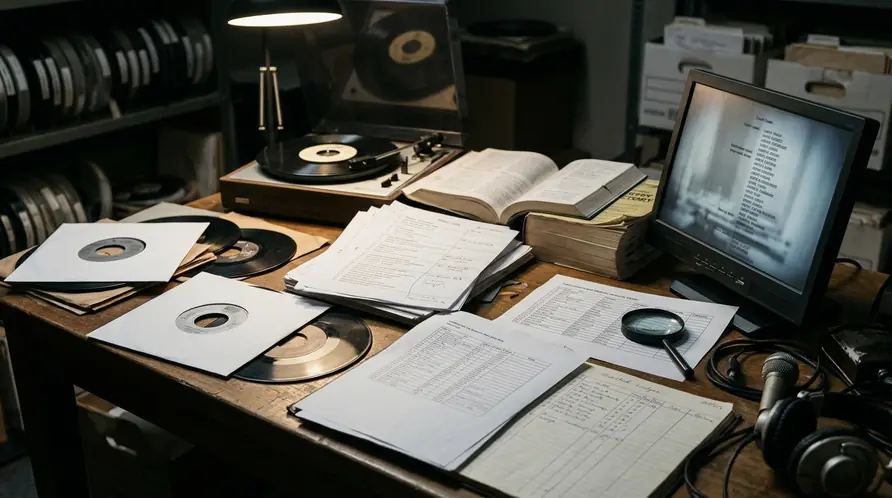
Keep one boundary in view. The booklet documents what that edition contains, and a song's absence from it tells you only that this album omitted it; the contract, the refusal, or a later release elsewhere all remain open questions you should keep searching on.
Four Versions, One Song
The playback edit used to teach the routine, the cue in the finished film, the entry in the credits and the recording on the album can each describe a different version of the same music. Match each layer on its own terms.
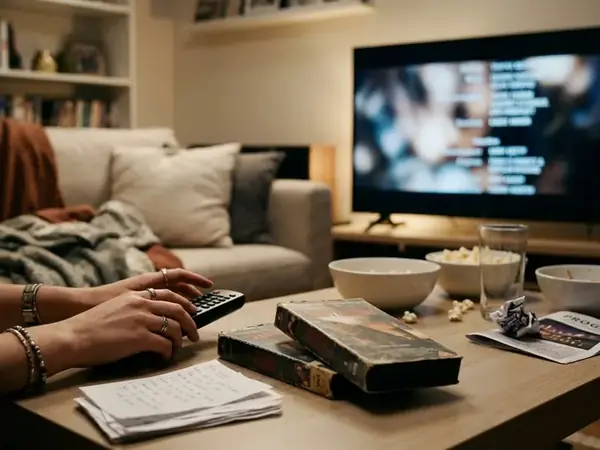
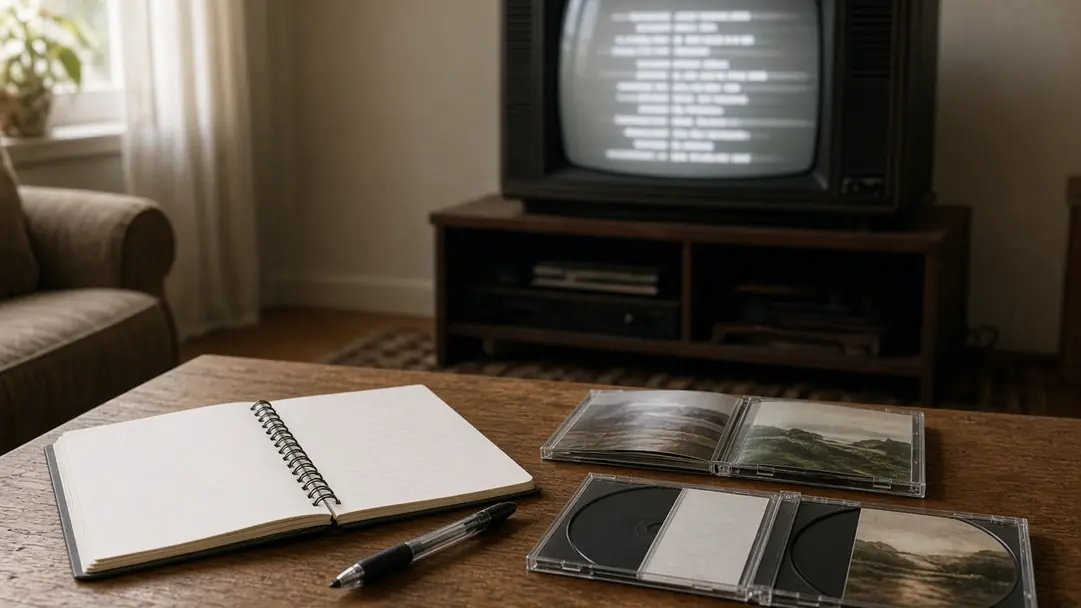
So the DVD sits paused on a credit frame, white text slightly soft on the old CRT. Your notebook holds a line in blue ink: title, two writer names, a BMI tag, a courtesy line naming a label you had never connected to the film. The three CD booklets lie open beside it, and none of them lists that track. A few days later a twelve-inch promo turns up with those same writer names on the label, and when the needle drops, the beat from the club doorway fills the room.