How long did the leads of Save the Last Dance train before the cameras rolled? A precise answer can travel far online even when nobody can point to the document that first supplied it. I start with the wording of the claim and work backward: where did it appear, when was that account published, and does a release-era source actually say the same thing?
For this film, the research trail runs through studio handouts, screenplay pages, 2001 press coverage and edition-specific DVD audio. Each source answers a different question. Keeping those questions separate is how a familiar story about ballet and hip-hop becomes a reliable account of how the film was made and received.
When a Dance-Trivia Claim Loses Its Source
A repeated training claim can sound settled long before anyone checks its origin. Its earliest traceable appearance may be a later fan account; a dated production note may describe a plan rather than completed work. Those are distinct pieces of evidence, however often the same sentence appears elsewhere.
Start a claim record with the exact wording. Add the publication or release date, a page number or playback interval, and a field stating whether the source describes an intention or an activity that took place. If the earliest version you can locate is retrospective, label it that way. Do not quietly promote it to a statement from the film’s 2001 release campaign.
Search material from the theatrical release through 2002 before turning to later recollections. That order keeps the original context in view when a modern account smooths a complicated rehearsal history into a neat anecdote. It also helps with casting stories: a person’s memory of a decision may be valuable, while a contemporaneous record tells you what the production said at the time.
What a Save the Last Dance Press Kit Can Establish
Studio production notes offer a useful starting point because they present the film as its release campaign presented it. They may describe choreography, actor preparation and the intentions behind a scene. Their value lies in their date and provenance, not in an assumption that promotional copy independently verifies every detail.
Search motion-picture archive catalogs for Save the Last Dance alongside “production notes” or “press kit.” Before copying a training claim, inspect the cover, credits and distribution information. A scan of an interior page alone may conceal whether the item is a studio handout or a collector’s later transcription. Record any printed issue date and the pagination exactly as it appears.
If an archive or memorabilia collector cannot supply the whole item, ask for the cover, contents page and relevant interior pages. The surrounding material gives an isolated sentence its place in the document. A note that says a rehearsal was scheduled, for example, belongs in a record of plans unless another source confirms that it happened.
Transcribe the passage with its page number before interpreting it. That small act preserves wording a paraphrase might erase: “would rehearse,” “rehearsed” and “was preparing to rehearse” point to different stages of production.
Following Dance Scenes Across Script Revisions
A screenplay comparison begins at the title page. Note the credited writers, the date and any revision marks before calling a copy an early draft, a revision or a shooting script. If the catalog description is unclear, ask the holding library what its copy actually is. Institutional libraries dedicated to motion picture arts provide a sensible place to begin that inquiry, though a catalog listing still needs to be checked against the item itself.
Next, match scenes by setting and action rather than page number. A dance passage can move between drafts, and revision pages can interrupt the original numbering. For each matched scene, log the draft date and page, any revision-page color or marking, and the start and end playback times in the theatrical cut.
What the Screen Can Confirm
Place the script passage beside the finished scene. Dialogue may have changed; an action described on the page may appear differently on screen; a dance sequence may occupy more or less room than the draft suggests. The comparison establishes the difference. It does not identify who requested the change or when that decision was made.
That distinction matters especially with dance, where a written instruction can leave considerable room for movement, camera position and editing. Keep a clear record of what appears on the page and what appears in the cut. Those observations make a stronger foundation than a confident guess about the path between them.
Reading the Film’s 2001 Reception in Its Own Time
The pairing of ballet and hip-hop now sits inside years of conversation about Save the Last Dance. Release-era writing lets that conversation start where audiences first encountered the film. Build a clipping file from newspaper and magazine issues dated January through March 2001, then search through December for follow-up coverage.
Separate reviews, cast interviews and promotional profiles. A critic describing how the dance styles play together is responding to the finished film. A cast or crew member discussing rehearsal is offering a production account. Both belong in the archive, but they should not be combined into a single, supposedly unanimous verdict.
For each item, record the issue date, byline, page or database image number, and its form. Check whether a clipping is a syndicated reprint before treating it as another independent reaction. If two critics disagree about a scene, preserve the disagreement; it tells us more about the film’s initial reception than a tidy consensus would.
Original print interviews deserve the same close reading as reviews. A question may invite an answer about the soundtrack, the romance or the training process, and the surrounding exchange can change how a short quotation reads. Returning to the full interview keeps a memorable line attached to the conversation that produced it.
Listening Closely to Early DVD Extras
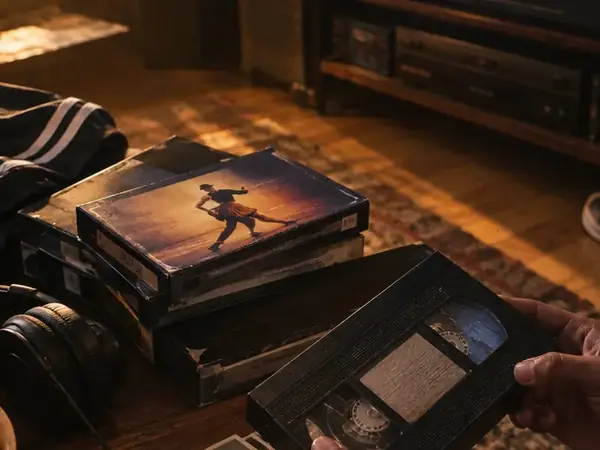
Home-video material brings voices and moving images into the research file, but the edition matters. Inspect an early DVD’s case and menus before describing its extras. Record the release or copyright information, region, any printed disc identifier, the audio-track label and each relevant featurette title. A reference to “the DVD commentary” is too loose if readers cannot tell which disc supplied it.
When a commentary discusses choreography or preparation, log the speaker and a start and end time to the second. Say whether those times come from the main film or a separate feature player. Then compare the recollection with a dated written source. A participant’s account may clarify how a plan felt in practice without turning every item on a printed schedule into a confirmed rehearsal.
Behind-the-scenes footage calls for similar care. A featurette may show a striking moment of rehearsal, yet its clips were selected and arranged for a promotional release. Describe what is visible, identify the featurette, and avoid treating the sequence as an uninterrupted record of the workday.
The crucial gap is straightforward: a dance session printed on a 2001 schedule establishes what was planned, not that every listed session took place. A spoken recollection can help investigate that gap if its speaker, edition and timecode remain attached.
A Production Timeline Built at the Reading Table
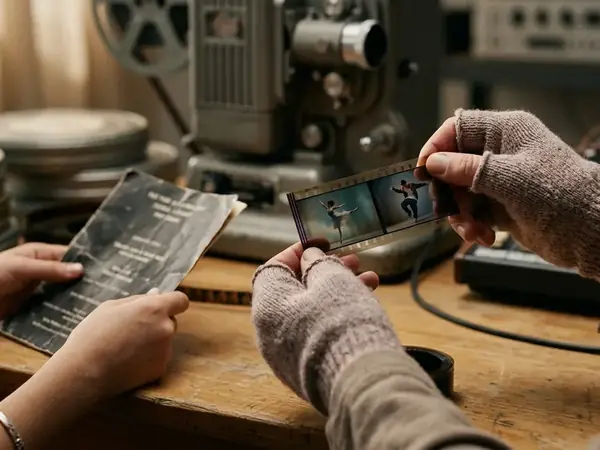
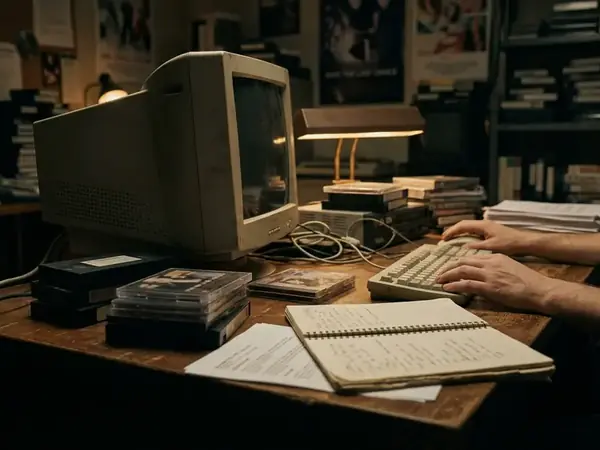
Picture a researcher opening a 2001 press kit in a quiet reading room. A statement about dance preparation appears on an interior page. They photograph it with the pagination visible, note the document date, and check whether a printed choreography schedule survives in the same collection. The paper gives them a dated claim and, perhaps, a plan to test.
At the next desk, the relevant DVD passage plays again. The researcher records the edition and the playback interval to the second, then places the speaker’s account beside the press-kit wording. In a day-by-day working timeline, a dated schedule entry sits alongside the matching oral account. Dates without supporting material stay blank.
The resulting account can say precisely what each source contributes: what the studio described, what a schedule proposed, what a participant later recalled and what the available record leaves unresolved. That restraint gives the film’s choreography room to be studied as work, shaped by people and decisions, rather than as a trivia answer.
In the reading room, the researcher turns back to the kit’s cover before filing the page photograph. On the timeline beside it, one rehearsal date has a source attached; the next square remains empty. The DVD player waits at the marked passage while they check the printed schedule once more.